
In modern cable-management systems, metal cable ladders are a core solution for safe, orderly and efficient installation and maintenance of power and signal cables. The four most common metal cable ladder types are powder-coated steel, pre-galvanized steel, hot-dip galvanized steel and stainless steel. Each has distinct characteristics, benefits and applications. This guide examines each option to help you select the most suitable solution for your project.
>>> See What is a cable ladder? Characteristics and its role in electrical systems
1. Powder-Coated Cable Ladder

- Characteristics: Made from sheet steel and finished with a powder-coating process. The coating provides both an attractive colour and a surface-protection layer.
- Advantages:
- High aesthetic value: A wide choice of colours and a smooth finish give projects a professional appearance.
- Reasonable cost: Initial investment is generally lower than hot-dip galvanized or stainless-steel cable ladders.
- Moderate corrosion resistance: The coating helps protect the base metal from mild environmental effects.
- Easy installation and maintenance: The smooth surface makes pulling and arranging cables convenient.
- Limitations:
- Limited corrosion resistance: The coating may be scratched during transport or installation, reducing protection of the base metal, especially in wet or chemical environments.
- Potentially shorter service life: Compared with hot-dip galvanized or stainless steel in harsh conditions.
- Applications: Civil buildings, offices, shopping centres and manufacturing plants with dry conditions and limited exposure to chemicals or high humidity.
Powder-coated cable ladders and their practical applications explains their applications in greater detail.
2. Pre-Galvanized Cable Ladder

- Characteristics: Manufactured from steel sheet that has been zinc coated before fabrication. The zinc layer forms a corrosion-protection barrier.
- Advantages:
- Better corrosion resistance than powder coating: Zinc protects the base metal more effectively in moderately humid or mildly chemical environments.
- Competitive cost: Usually a mid-range investment suitable for many project types.
- Bright appearance: The zinc coating gives a relatively attractive, bright surface.
- Fast production: The sheet has already received surface treatment.
- Limitations:
- Cut edges and welds may corrode: Cutting and welding can remove zinc at these locations, increasing the risk of rust over time.
- Limited performance in severe environments: Compared with hot-dip galvanized steel or stainless steel.
- Applications: Commercial buildings, workshops and industrial zones with non-severe conditions, medium humidity and limited contact with aggressive chemicals.
3. Hot-Dip Galvanized Cable Ladder
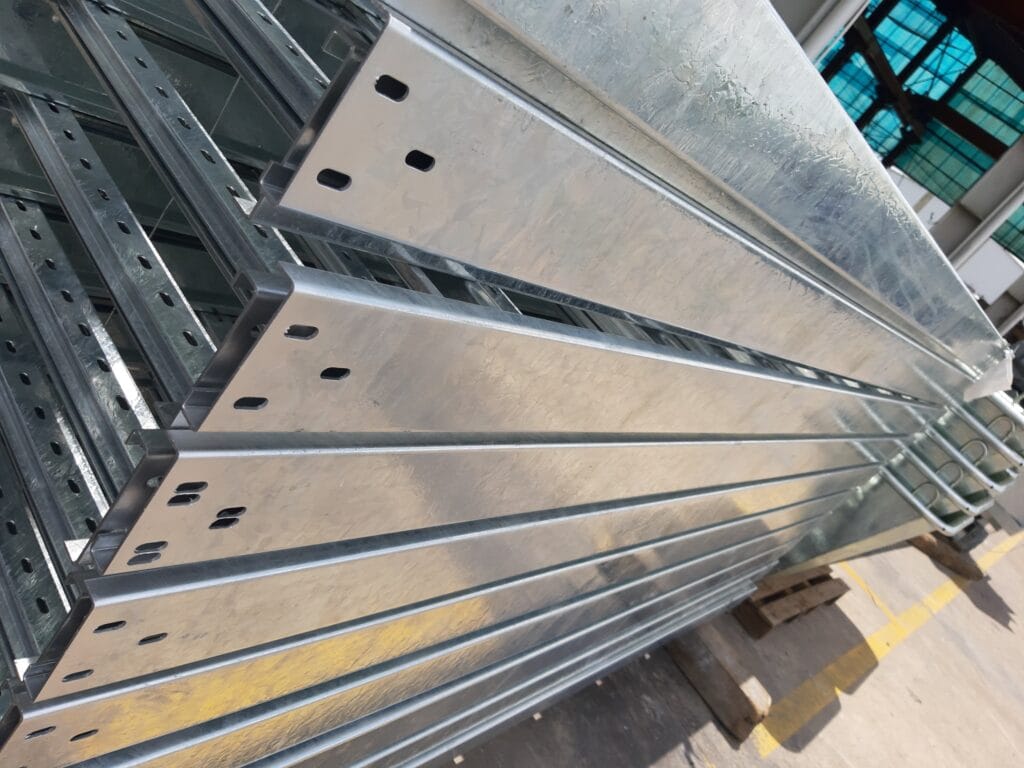
- Characteristics: The completed cable ladder is immersed in a bath of molten zinc. This creates a thick, continuous zinc coating over the entire surface, including cut edges and welds.
- Advantages:
- Outstanding corrosion resistance: The thick continuous coating gives maximum protection against high humidity, chemicals and harsh environmental factors.
- Long service life: Suitable where durability and long-term service life are required.
- High mechanical durability: Hot-dip galvanizing also contributes to the ladder’s hardness and robustness.
- Limitations:
- Highest cost among the three steel options: Initial investment is higher than powder-coated and pre-galvanized steel.
- Less smooth finish than powder coating: The galvanized surface can be rougher.
- Applications: Outdoor installations, heavy-industry zones, chemical plants, coastal projects and other highly corrosive environments.
Read Hot-dip galvanized cable ladders to ASTM A123 for more on relevant standards.
4. Stainless Steel Cable Ladder

- Characteristics: Entirely fabricated from stainless steel, with common grades including SUS304 and SUS316.
- Advantages:
- Excellent corrosion resistance: Stainless steel withstands most environmental effects, including strong chemicals, seawater and severe weather.
- Extremely long service life: It offers exceptional durability compared with other materials.
- High aesthetic value: Its bright, premium surface does not rust over time.
- Hygienic: The smooth surface is easy to clean and resists dirt accumulation.
- Limitations:
- Highest cost: Initial investment is significantly greater than for other metal cable ladders.
- Mechanical strength may be lower than hot-dip galvanized steel in some heavy-load uses: This depends on grade and detailed design.
- Applications: Food, pharmaceutical, healthcare and chemical industries; coastal works, ships and locations demanding the highest durability and corrosion resistance.
Conclusion
Selecting the right metal cable ladder depends on the installation environment, required durability and service life, appearance and project budget. Understanding the characteristics, advantages and limitations of every type helps you make an informed choice so that the cable-management system remains effective, safe and durable over time. Consider these factors carefully to select the optimum solution for your project.
If you need high-quality, competitively priced cable ladders, please contact The Sun.