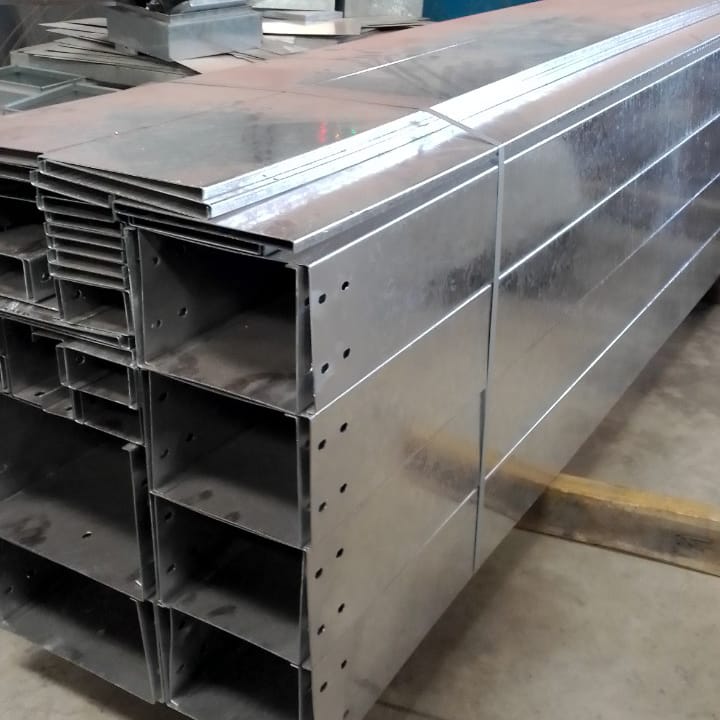

Hot-dip galvanizing is one of the most widely used corrosion-protection methods for steel components, including cable ladders. This article explains what hot-dip galvanizing is, the safety considerations involved, how it protects steel, and why it is such a popular finish for cable ladders used in construction, power, and industrial projects.
What Is Hot-Dip Galvanizing?
Hot-dip galvanizing is the process of coating iron or steel with a layer of zinc. The metal is immersed in a bath of molten zinc at a temperature of roughly 450°C (842°F). When the coated surface is exposed to air, the pure zinc (Zn) reacts with oxygen (O2) to form zinc oxide (ZnO). The zinc oxide then reacts with carbon dioxide (CO2) to form zinc carbonate (ZnCO3), a light-gray layer that protects the underlying steel from corrosion in most environments. Galvanized steel is widely used wherever strong corrosion resistance is needed without the cost of stainless steel, and it is prized for its excellent balance of price and service life.
Safety Considerations
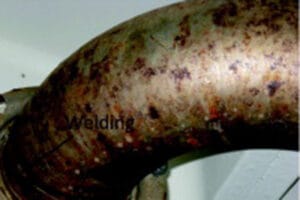
Galvanized steel can be welded, but welders must be aware of the hazards of zinc fumes. Zinc fumes are released once the galvanized metal reaches a certain temperature, which varies depending on the specific galvanizing process used. For prolonged, continuous exposure, the recommended maximum working temperature for hot-dip galvanized steel is around 200°C (392°F). Electro-galvanized sheet steel is commonly used in automotive manufacturing to improve the corrosion resistance of exterior body parts; however, that is a different process and typically produces a thinner zinc coating than hot-dip galvanizing.
How Galvanizing Protects Steel
Like other corrosion-protection systems, galvanizing protects steel by creating a barrier between the steel and the surrounding air. Because zinc is more electrochemically active (less noble) than steel, it has a unique property: even if the zinc coating is damaged and the underlying steel is exposed to air, the remaining zinc continues to protect the steel through galvanic (sacrificial) corrosion.
Application in Cable Ladder Manufacturing
Hot-dip galvanizing is extremely common in manufacturing products that require high durability and strong corrosion resistance, and cable ladders are one of its most widespread applications.
Cable ladders are an essential component in construction, electrical, and other industrial projects, used to provide support and protection for power cables. To ensure the safety and durability of a cable ladder, the material must be manufactured precisely and carefully.
Advantages of Hot-Dip Galvanized Cable Ladders
Hot-dip galvanizing is a zinc-coating method widely used in cable ladder manufacturing. The hot-dip galvanizing process can extend a cable ladder’s service life by many years and significantly prolong its usable lifespan.
The hot-dip galvanized layer wraps around the cable ladder to form a corrosion-resistant protective coating. In damp or salt-water environments, materials typically corrode and lose strength over time; however, thanks to the zinc coating on its surface, a galvanized cable ladder can withstand these harsh conditions without rusting.
In addition, the zinc coating keeps the cable ladder looking newer and more durable throughout its service life. With an even, smooth coating on the ladder’s surface, the finish is not only optimized for support and safety but also contributes a clean, attractive appearance.
Choose Hot-Dip Galvanized Cable Ladders
In summary, hot-dip galvanizing is a zinc-coating method that increases the durability and corrosion resistance of materials, including cable ladders. The zinc coating applied around a cable ladder has been proven to optimize both safety and durability throughout its service life. If you need high-quality, reliable cable ladders, contact us for consultation and to choose the best product for your project.
This article references information from Wikipedia.org.
For more technical background, see the Wikipedia entry on hot-dip galvanization.