
A cable tray connector, also known as a cable tray connecting fitting, is an essential component of any cable tray system. These are parts designed to join cable tray sections together, creating a continuous, sturdy, and visually tidy system.
What Is a Cable Tray Connector?
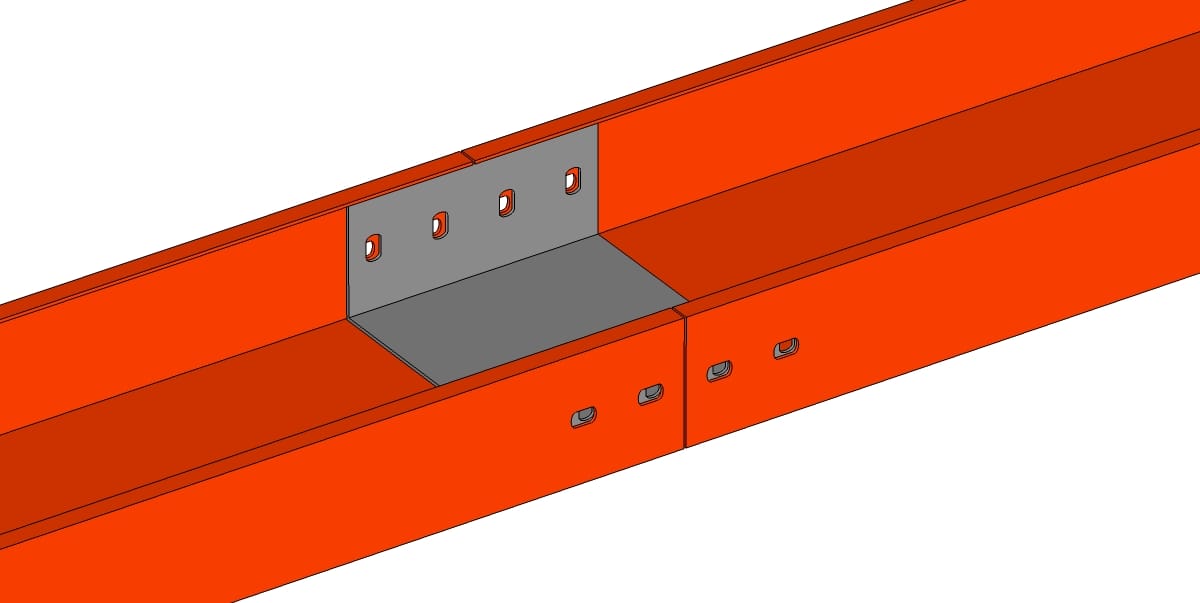
A cable tray connector is used to join two cable tray sections together.
Purpose of Cable Tray Connectors
Cable tray connectors play an important role in:
- Joining tray sections: Firmly connecting tray sections together to form a seamless cable route and ensure system safety.
- Increasing durability: Connections reinforce the strength of the entire cable tray system, allowing it to withstand heavy loads and external forces.
- Ensuring aesthetics: Connectors come in various styles, helping the cable tray system look neat, attractive, and suited to different spaces.
- Installation flexibility: Connectors make installing, adjusting, and maintaining the cable tray system easier and more flexible.
Common Types of Cable Tray Connectors
- Straight (U-shaped) connector: Used to join straight, aligned tray sections.
- Splice-plate connector: Also used to join straight, aligned sections; unlike the U-shaped connector, this type uses a pair of plates fastened to both sides of the tray.
- Horizontal bend connector: Used to turn the tray system horizontally at any angle.
- Vertical bend connector: Used to route the tray upward or downward at an adjustable angle.
- Elbow connector: Used to join tray sections at a right angle or other angle.
- Reducer connector: Used to join tray sections of different sizes.
- Tee connector: Used to branch the tray system.
Materials
Connectors are typically manufactured from the same material as the cable tray itself, including:
- Powder-coated steel
- Electro-galvanized steel
- Stainless steel
- Hot-dip galvanized steel
- Aluminum alloy
- Plastic
Depending on the material, connectors differ in construction and size to ensure a secure connection between tray sections.
Advantages
- Safety: Ensures the safety of the electrical system and reduces the risk of fire.
- Cost savings: Reduces maintenance and repair costs.
- Durability: Long service life, able to withstand environmental effects.
- Easy installation: Saves installation time and labor.
Notes When Buying and Using Cable Tray Connectors
- Material: Choose connectors made from good-quality material with strong corrosion and heat resistance.
- Size: Choose a connector size that matches the size of the cable tray.
- Manufacturer: Choose products from reputable manufacturers with guaranteed quality.
- Instructions: Read the instructions carefully before installation to ensure correct technique.
Conclusion
Cable tray connectors are an important part of any electrical system. Choosing and using the right type of connector helps ensure the safety, aesthetics, and efficiency of the system.