
What Is a Cable Tray?
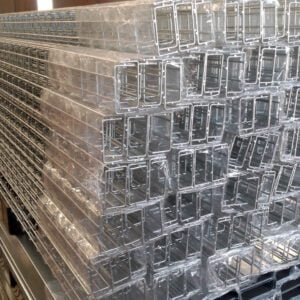
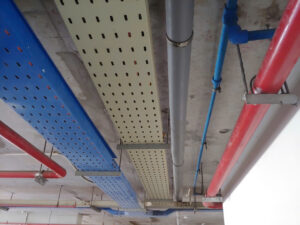
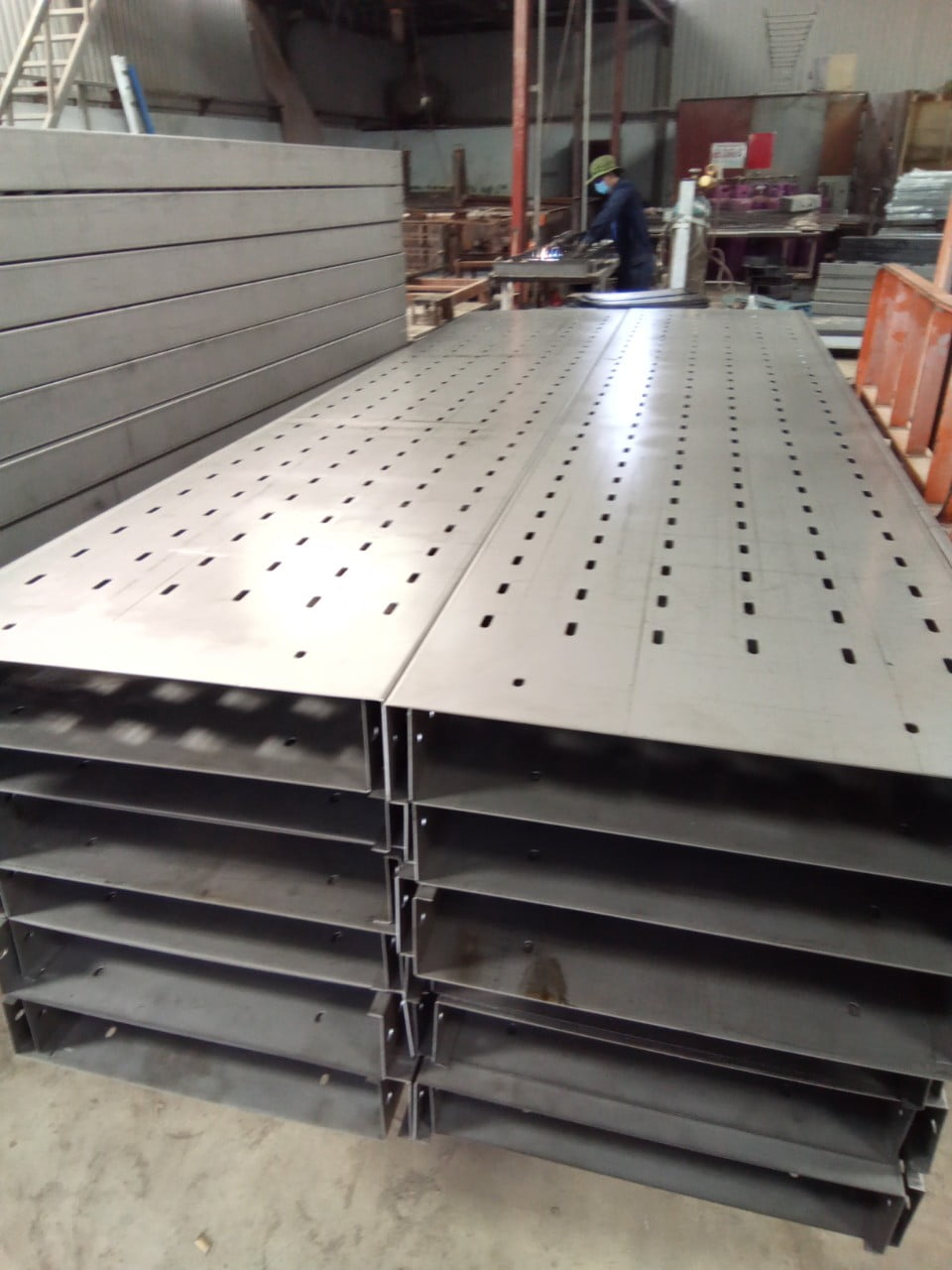
A cable tray is a system of channels or trays made from metal (steel, aluminum) or composite material. It is designed to install, route, and protect electrical cables, fiber-optic cables, and other conductors in electrical, telecommunications, and industrial systems.
Why Use a Cable Tray?
- Effective organization: Keeps cables neatly arranged, avoiding tangles and making the system easy to manage and maintain.
- Optimal protection: Prevents external effects such as impact, abrasion, high temperature, and chemicals, extending cable service life.
- Safety: Reduces the risk of short circuits and fire, keeping operators and equipment safe.
- Flexibility: Easy to install, expand, and adjust as needs change.
- Aesthetics: Creates a professional, orderly working environment.
Practical Applications
Cable trays are widely used across many sectors, from residential buildings to large industrial plants:
- Civil construction: Installing electrical systems in high-rise buildings, shopping centers, hospitals, and schools. Cables are neatly arranged in trays running along the ceiling or walls of a building.
- Industry: Installing automated control systems in manufacturing plants and assembly lines. Trays run alongside machinery and equipment on a production line.
- Telecommunications: Installing fiber-optic and LAN cabling in data centers and office buildings. Trays hold fiber-optic cables in a data center.
- Infrastructure: Installing electrical systems for tunnels, bridges, and substations. Trays are mounted on tunnel walls.
Common Types of Cable Trays
- Steel cable trays: High durability and heavy load capacity, commonly used in harsh environments.
- Aluminum cable trays: Lightweight, good corrosion resistance, and easy to fabricate.
- Plastic cable trays: Good electrical insulation.
Selection Criteria
- Cable type: The size, quantity, and material of the cables.
- Installation environment: Temperature, humidity, chemical exposure, and fire risk.
- Load: The load-bearing capacity of the cable tray.
- Aesthetics: A design suited to the installation space.
Notes When Using Cable Trays
- Correct installation technique: Ensure connections are secure and avoid looseness.
- Periodic inspection: Detect and address damage promptly.
- Regulatory compliance: Ensure electrical safety and adherence to technical standards.
Conclusion: The cable tray is an effective solution for organizing and protecting cabling systems in construction and industrial projects. Choosing and using cable trays correctly helps ensure safety, improve operational efficiency, and create a professional working environment. See the Wikipedia entry on cable trays for a broader technical overview.