- Introduction to Trunking
- Why Use Trunking?
- Common Types of Trunking
- Comparing the Pros and Cons of Each Trunking Type
- Applications
- Benefits of Using Trunking
- Choosing the Right Trunking
- Trunking Installation Guide
- Tips for Effective Trunking Maintenance to Keep the Electrical System Running Stably
- Why Is Trunking Maintenance Necessary?
- Where to Buy Trunking?
- Contact Information
- Conclusion
Introduction to Trunking
Trunking, also known as cable tray, is a system of channels or trays used to hold and protect electrical cables in construction projects. It plays an important role in organizing electrical wiring neatly, safely, and attractively.
Why Use Trunking?
1. Keeps Cables Organized
Trunking lets you arrange cables in an orderly way, keeping the installation space tidy. This not only simplifies installation but also makes maintenance and repair easier than ever.
2. Protects Cables Safely
Trunking provides a sturdy protective layer for cables, shielding them from physical impact and harsh environmental factors. This keeps the system running stably and reduces the risk of short circuits or fire.
3. Improves a Project’s Appearance
Using trunking gives offices, factories, and high-rise buildings a more professional look. With many styles and colors available, it’s easy to match the overall architecture.
4. Easy to Change and Upgrade
When the electrical system needs to change or be upgraded, trunking makes this easy without altering the building’s structure — saving considerable time and cost.
Common Types of Trunking
- Steel trunking: Usually galvanized or powder-coated to resist rust. High durability and good load-bearing capacity.
- Aluminum trunking: Lighter than steel and easy to fabricate. Commonly used where weight is a concern.
- Plastic trunking: Lightweight with good electrical insulation. Commonly used in dry environments.
Comparing the Pros and Cons of Each Trunking Type
Depending on material and design, each type has its own advantages and disadvantages. Here’s a detailed comparison of the common types:
1. Steel Trunking
Advantages:
- High durability and good load-bearing capacity, suited to harsh environments.
- Good heat resistance, keeping the electrical system safe.
- Easy to fabricate and install.
Disadvantages:
- Heavy, making it harder to transport and install in hard-to-reach places.
- Prone to rust if not properly protected.
- Higher cost than other trunking types.
2. Aluminum Trunking
Advantages:
- Lightweight, easy to transport and install.
- Good corrosion resistance; does not rust.
- Conducts heat well, helping dissipate heat from electrical equipment.
Disadvantages:
- Not as durable as steel; prone to deformation under heavy load.
- Higher cost than plastic trunking.
3. Plastic Trunking
Advantages:
- Lightweight, easy to transport and install.
- Good corrosion resistance and electrical insulation.
- Inexpensive.
- Available in a wide range of colors and styles.
Disadvantages:
- Lower mechanical strength than steel or aluminum.
- Cannot withstand high temperatures.
- Prone to deformation under heavy load.
Applications
Trunking is widely used across many fields, including:
- In buildings: Installing lighting, HVAC, fire-alarm, and communication systems.
- In factories and plants: Installing power distribution, control, and automation systems.
- In shopping centers: Installing lighting, elevator, and conveyor systems.
Benefits of Using Trunking
- Extends cable service life: Protects cables from environmental effects.
- Reduces fire risk: Prevents short circuits.
- Easy maintenance and repair: Quick access to cables.
- Improves a project’s appearance: Creates a neat, professional electrical system.
Choosing the Right Trunking
Choosing the right trunking depends on several factors, such as the installation environment and the number and type of cables used. Today’s trunking systems are typically made from materials such as PVC plastic or metal (galvanized steel, powder-coated steel, stainless steel, aluminum), depending on the specific use.
Note: wire mesh cable tray is also a form of trunking.
Trunking Installation Guide
To install trunking effectively, you need to:
- Determine the cable type: Choose a size suited to the type and number of cables.
- Determine the installation environment: Choose a material suited to the environmental conditions.
- Consult with specialists: For advice and support during installation.
Manufacturing and Installing Trunking
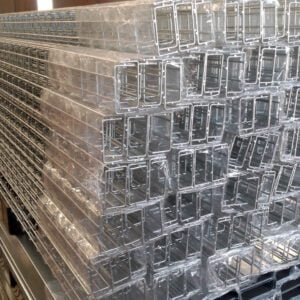
Metal trunking is extremely durable, with excellent load-bearing capacity, offering maximum protection for your cabling system. Our products are manufactured on modern production lines, ensuring high quality and a long service life.
Tips for Effective Trunking Maintenance to Keep the Electrical System Running Stably
To keep a trunking system performing well and extend its service life, periodic maintenance is recommended. Here are some useful tips:
Periodic Inspection
- Visual inspection: Regularly check for abnormal signs such as rust, deformation, cracks, or signs of overload.
- Check connection tightness: Make sure the joints between trunking sections and fittings are securely tightened, not loose.
- Check stability: Check whether the trunking shakes or shifts.
Cleaning the Trunking
- Remove dust and debris: Use a vacuum or soft cloth to clean dust from the trunking surface and the cables inside.
- Check and clean ventilation openings: Make sure vent holes are not blocked, so heat dissipation stays effective.
Inspecting the Cables Inside
- Check the insulation jacket: Check whether cable insulation is worn or cracked.
- Check connections: Check whether cable connections are loose or oxidized.
- Check current: Use a measuring device to check the current flowing through the cables and confirm there is no overload.
Other Notes
- Schedule maintenance: Set up a regular maintenance schedule to ensure the work is carried out consistently.
- Log issues: Record any issues found during inspection and maintenance so they can be tracked and resolved promptly.
- Replace damaged parts: If any part is found to be damaged, replace it immediately to avoid affecting the system.
Why Is Trunking Maintenance Necessary?
- Ensures safety: Detects and resolves potential issues promptly, preventing short circuits and fire.
- Extends service life: Regular maintenance increases the lifespan of the trunking system and electrical equipment.
- Reduces repair costs: Catching and fixing small issues early saves on larger repair costs later.
- Ensures stable operation: A well-maintained trunking system runs reliably without interruption.
Advice: Trunking maintenance should be handled by professional service providers to ensure quality and safety.
Where to Buy Trunking?
The Sun is a trusted supplier of high-quality cable trays, ladders, and trunking, with a wide range of designs and sizes. We are committed to bringing customers the best products alongside professional consulting, fast delivery, and an attractive warranty policy. Contact The Sun today for advice and the best quote!
Contact Information
Address: 16th Floor, Becamex Tower, 230 Binh Duong Boulevard, Phu Hoa Ward, Thu Dau Mot City, Binh Duong Province, Vietnam
Email: info@thesun.vn
Tel: 0274 3 969 848 – 0274 3 969 849 – 0274 3 801 016
Fax: 0274 3 801 017
Mobile & Zalo: 0903 988 010 – 0903 988 018
Conclusion
Trunking is an indispensable solution in modern electrical systems. Using it not only ensures safety but also improves the appearance and efficiency of a project. See the Wikipedia entry on cable trunking and trays for further background.