What Is a Cable Support System and What Does It Include?
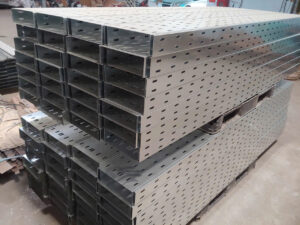
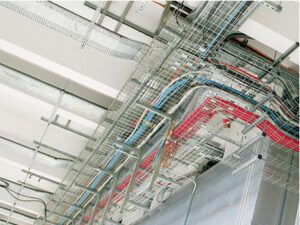
A cable support system is designed to organize, protect and route power cables, fiber-optic cables and other types of cable in construction projects. This system includes the following main components:
- Cable ladder: A ladder-shaped support used to hold and route cables.
- Cable trunking: A rectangular, box-shaped trunking used to contain and protect cables.
- Cable tray: A flat tray with side rails, used to hold cables.
- Wire mesh cable tray: A mesh-structured tray used for ventilation and heat dissipation for the cables.
The Role of a Cable Support System
- Organizing cables: Helps arrange cables neatly and in an orderly manner, preventing tangling.
- Protecting cables: Protects cables from mechanical impact, chemicals, high temperatures, humidity, dust, and more.
- Ensuring safety: Prevents fire, explosions and short-circuits, keeping users safe.
- Improving aesthetics: Makes the project look more professional and modern.
Here Are the 4 Types of Cable Trays/Ladders You Should Know
1. Cable Trunking
- Characteristics: Rectangular, box-shaped, usually made from powder-coated steel, galvanized steel or stainless steel.
- Applications: Commonly used in residential and industrial projects that require high aesthetic standards.
- Advantages: Easy to install, maintain and clean.
- Disadvantages: Poorer heat dissipation compared to other types in a cable support system.
Learn more about cable trunking here: Common Types of Cable Trunking & Industrial Applications
2. Cable Ladder
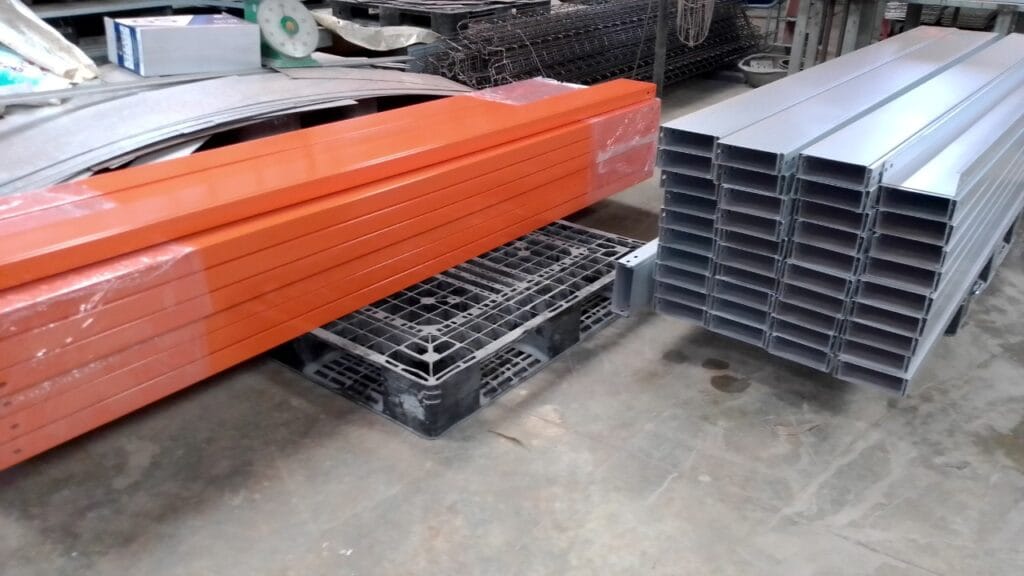
- Characteristics: Ladder-shaped, usually made from galvanized steel or stainless steel.
- Applications: Commonly used in industrial projects with a large number of cables to route.
- Advantages: Good heat dissipation, high load-bearing capacity.
- Disadvantages: Harder to install than cable trunking.
Buy High-Quality, Affordable Cable Ladders

3. Cable Tray
- Characteristics: Flat shape, usually made from galvanized steel or stainless steel.
- Applications: Commonly used to hold smaller-diameter cables.
- Advantages: Easy to install, low cost.
- Disadvantages: Offers less cable protection than the other types.
The Cable Tray product line, suited to every project

4. Wire Mesh Cable Tray
- Characteristics: Mesh structure, usually made from galvanized steel or stainless steel.
- Applications: Commonly used in environments requiring high ventilation, such as server rooms and data centers.
- Advantages: Good heat dissipation, lightweight.
- Disadvantages: Offers less cable protection than the other types in a cable support system.
This is one of The Sun’s flagship product lines: Wire Mesh Cable Trays and Installation Accessories

Choosing the Right Type of Cable Support
Choosing the right cable support system is essential to ensuring your electrical system runs stably, safely and efficiently. Here are the factors to consider when choosing:
1. Cable Type
- Cable diameter: Determine the largest cable diameter that will pass through the system to choose the right size.
- Number of cables: The number of cables affects the required cross-sectional area of the support.
- Cable type: Power cables, fiber-optic cables, control cables, etc. each have different environmental and durability requirements.
2. Installation Environment
- Temperature: High-temperature environments require cable supports with good heat resistance.
- Humidity: Humid environments require cable supports made from corrosion-resistant material.
- Chemicals: If exposed to chemicals, choose a cable support with good chemical corrosion resistance.
- Installation location: Indoor, outdoor, or humid locations will all affect the choice of material and style.
3. Technical Requirements
- Load: The cable support must be able to bear the load of the cables and any attached equipment.
- Load-bearing capacity: The system must withstand mechanical stresses such as vibration and impact.
- Aesthetics: If the installation location requires high visual appeal, choose an attractive style.
4. Type of Cable Support
- Cable ladder: Suitable for systems with many cables that require high durability and good heat dissipation.
- Cable trunking: Suitable for systems with fewer cables, where aesthetics is a priority.
- Cable tray: Suitable for small, simple cable systems.
- Wire mesh cable tray: Suitable for environments requiring good ventilation and fast heat dissipation.
5. Material
- Galvanized steel: Common, reasonably priced, and can withstand humid environments.
- Powder-coated steel: Highly aesthetic, with many color choices. Powder-coating colors can be selected from the basic RAL color range.
- Stainless steel: Durable, highly corrosion-resistant, suitable for harsh environments. Although called “stainless” steel, there are a few points worth knowing: 304 Stainless Steel: Durable, But Not for Every Environment — Common Misconceptions to Avoid
- Plastic: Lightweight, good electrical insulation, but with lower heat resistance than metal.
6. Size
- Width: Depends on the number and size of the cables.
- Height: Depends on the number of cable layers needed.
- Thickness: Depends on the load and durability requirements.
7. Accessories
- Tee joint: Used to split a cable support run into 3 branches.
- Coupler: Used to connect sections of cable support together.
- Horizontal bend: Used to change the direction of the cable support run horizontally.
- Vertical bend: Used to change the direction of the cable support run vertically (up or down).
- Bracket: Used to fasten the cable support to a wall or column.
- Hanger and threaded rod: Used to suspend the cable support system from the ceiling.
Process for Choosing a Cable Support System
- Determine technical requirements: Number of cables, cable type, installation environment, etc.
- Compare cable support types: Evaluate the pros and cons of each type.
- Choose the material: Select a material suited to the installation environment.
- Determine the size: Calculate the size based on the number and size of the cables.
- Choose accessories: Select the appropriate accompanying accessories.
Conclusion
A cable support system plays an important role in organizing, protecting and routing cables in construction projects. Choosing the right type of cable support helps ensure the safety, efficiency and appearance of your project.
The Sun Joint Stock Company manufactures cable trays and cable ladders to meet every project need. Contact us today!
#cable_support #cable_trunking #cable_ladder #cable_tray #wire_mesh_cable_tray #electrical_system #construction #cable_protection