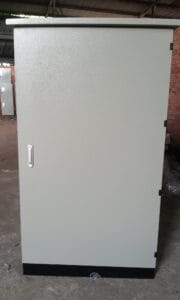
The Ingress Protection (IP) rating for an electrical enclosure is an essential international classification used in electrical engineering. It indicates how effectively an enclosure—such as an electrical cabinet, junction box or lighting fixture—protects against the entry of solid objects, including dust and fingers, and liquids such as water.
Understanding and selecting the correct IP protection rating is critical for operator safety, equipment durability and stable operating performance in different environments.
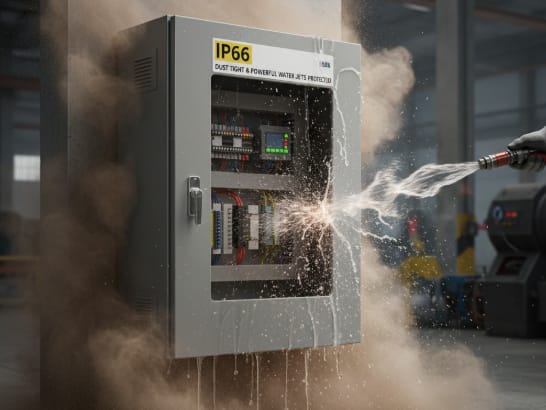
🧐 Structure and Meaning of an Electrical Enclosure IP Code
The protection rating of an electrical enclosure is expressed by the letters IP followed by two digits, for example IP65 or IP54.
IP P1P2
Where:
- IP stands for Ingress Protection.
- P1 (first digit): Degree of protection against access to hazardous internal parts and the entry of solid objects, including dust.
- P2 (second digit): Degree of protection against the entry of liquids, particularly water.
Meaning of the First Digit (P1): Solid Objects and Dust
| P1 | Protection against solid objects | Protected against |
| 0 | No protection. | |
| 1 | Protected against solid objects >= 50mm, for example accidental hand contact. | |
| 2 | Protected against solid objects >= 12.5mm, for example finger contact. | |
| 3 | Protected against solid objects >= 2.5mm, for example tools and wires. | |
| 4 | Protected against solid objects >= 1.0mm, for example thin metal wires. | |
| 5 | Dust Protected. Limited dust may enter, but not enough to interfere with equipment operation. | Dust |
| 6 | Dust Tight. Completely prevents dust ingress. | Dust |
Meaning of the Second Digit ($P_2$): Liquids and Water
| P2 | Protection against liquids and water |
| 0 | No protection. |
| 1 | Protected against vertically falling water drops. |
| 2 | Protected against vertically falling water drops when the enclosure is tilted up to 15o. |
| 3 | Protected against spraying water at angles up to 60o from vertical. |
| 4 | Protected against splashing water from any direction. |
| 5 | Protected against low-pressure water jets from any direction, using a 6.3mm nozzle. |
| 6 | Protected against powerful water jets from any direction, using a 12.5mm nozzle. |
| 7 | Protected against temporary immersion in water under specified depth and duration conditions. |
| 8 | Protected against continuous immersion under specified conditions, normally deeper or longer than rating 7. |
| 9K | Protected against high-pressure, high-temperature water jets, for example industrial pressure washing. |
💡 Common IP Ratings and Applications
| IP rating | Detailed meaning | Common application |
| IP20 | Protected against finger access. No water protection. | Indoor electrical enclosures in dry rooms. |
| IP54 | Dust protected to degree 5 and protected against splashing water to degree 4. | Electrical enclosures in workshops with dust but without severe moisture or direct heavy rain. |
| IP55 | Dust protected to degree 5 and protected against low-pressure water jets to degree 5. | Industrial areas where light hose-down cleaning may be required. |
| IP65 | Completely dust tight and protected against low-pressure water jets from any direction. | Sheltered outdoor enclosures and production areas cleaned with water hoses. |
| IP66 | Completely dust tight and protected against powerful water jets. | Unsheltered outdoor enclosures, ports and construction sites. |
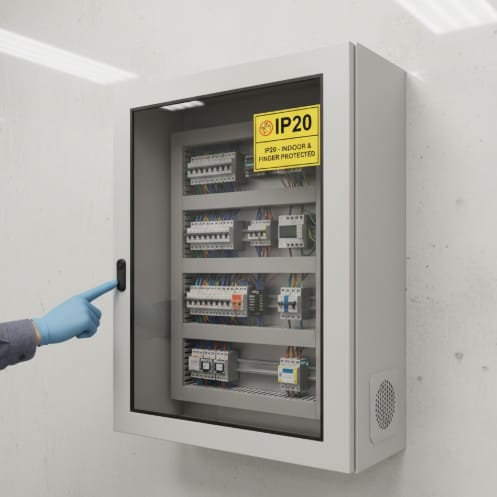
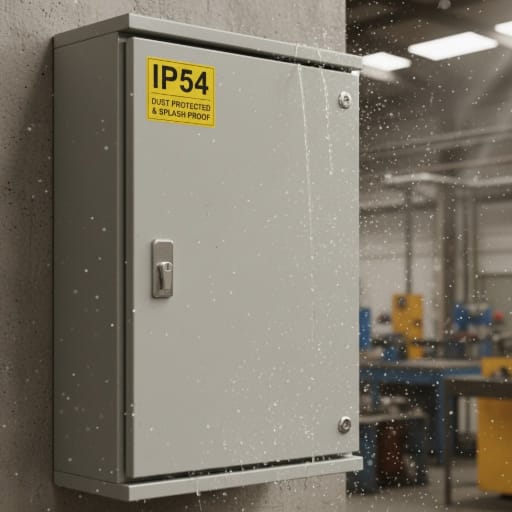
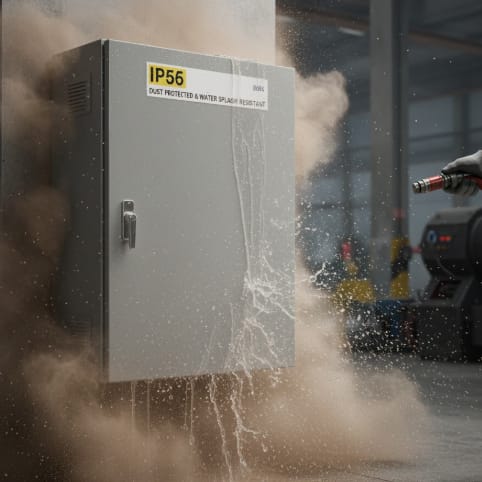
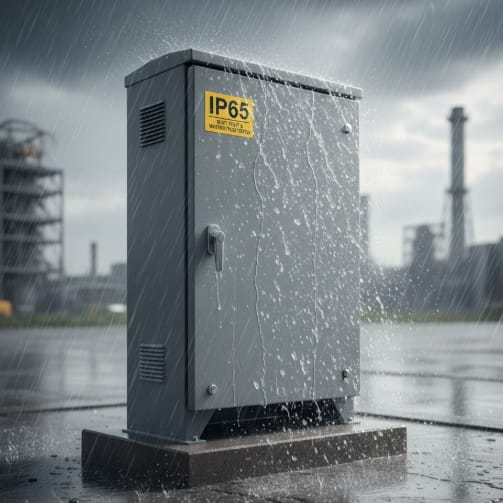
✅ Why Selecting the Correct Electrical Enclosure IP Rating Matters
Selecting an appropriate electrical enclosure IP rating directly affects the service life and reliability of the electrical system.
- Personnel safety: Prevents accidental access to live parts by operators (P1>=2), reducing electric-shock risk.
- Equipment protection: Prevents dust, moisture and water ingress that could cause short circuits and corrosion of internal electronic and mechanical components.
- Cost optimization: A higher IP rating is not always better. Specifying an unnecessarily high rating for a clean, dry environment increases capital cost, while selecting a rating that is too low for a demanding environment leads to premature failure and higher repair costs.
When designing and installing industrial electrical enclosures, always evaluate the installation environment—indoors, outdoors, wet, dusty or chemically exposed—to define the correct electrical enclosure IP protection rating.
Reference article: https://en.wikipedia.org/wiki/IP_code