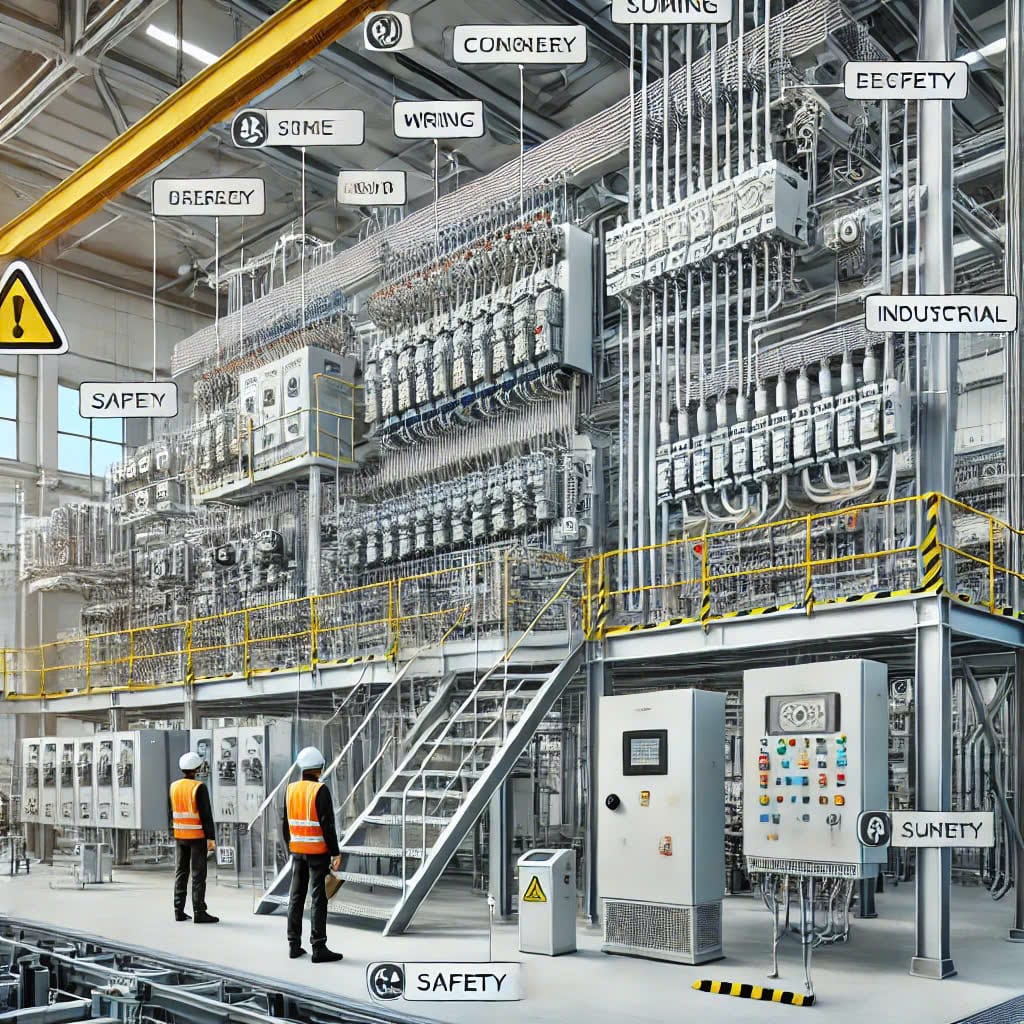

Industrial electricity is fundamental to national industrialisation and modernisation. It supplies energy for production in factories and plants, as well as construction, transport and service facilities.
Electricity is a set of physical phenomena associated with the presence and movement of electrically charged matter. Electricity is linked to magnetism; both are described by the electromagnetic effect and Maxwell’s equations. Common electrical phenomena include lightning, static electricity, electric heating and discharge.
A positive or negative charge creates an electric field. The movement or flow of charged particles is called electric current and produces a magnetic field. In most cases, the force on a charge is described by Coulomb’s law. Electric potential is the ability of an electric field to do work on a charge, measured in volts. Electricity is central to modern technologies, including power engineering and electronics.
Electromagnetic phenomena have been known since antiquity, although electrical theory developed slowly until the 17th and 18th centuries. Electromagnetic theory advanced in the 19th century, and electrical engineering then brought it into industry and everyday life. Rapid progress in electrical technology transformed industry and society and helped drive the Second Industrial Revolution. Electricity’s versatility enables applications in transport, heating, lighting, telecommunications and computing. Today, electrical energy is the backbone of modern industrial society.
Key Characteristics of Industrial Electricity
- High power capacity: Industrial electricity supplies the high power required by industrial equipment and systems.
- Stability: Industrial voltage and frequency are maintained consistently for continuous, efficient equipment operation.
- High reliability: Industrial power systems are designed and operated to minimise outages and production interruptions.
- Safety: Strict safety standards and procedures are followed during installation, operation and maintenance to protect people and property.
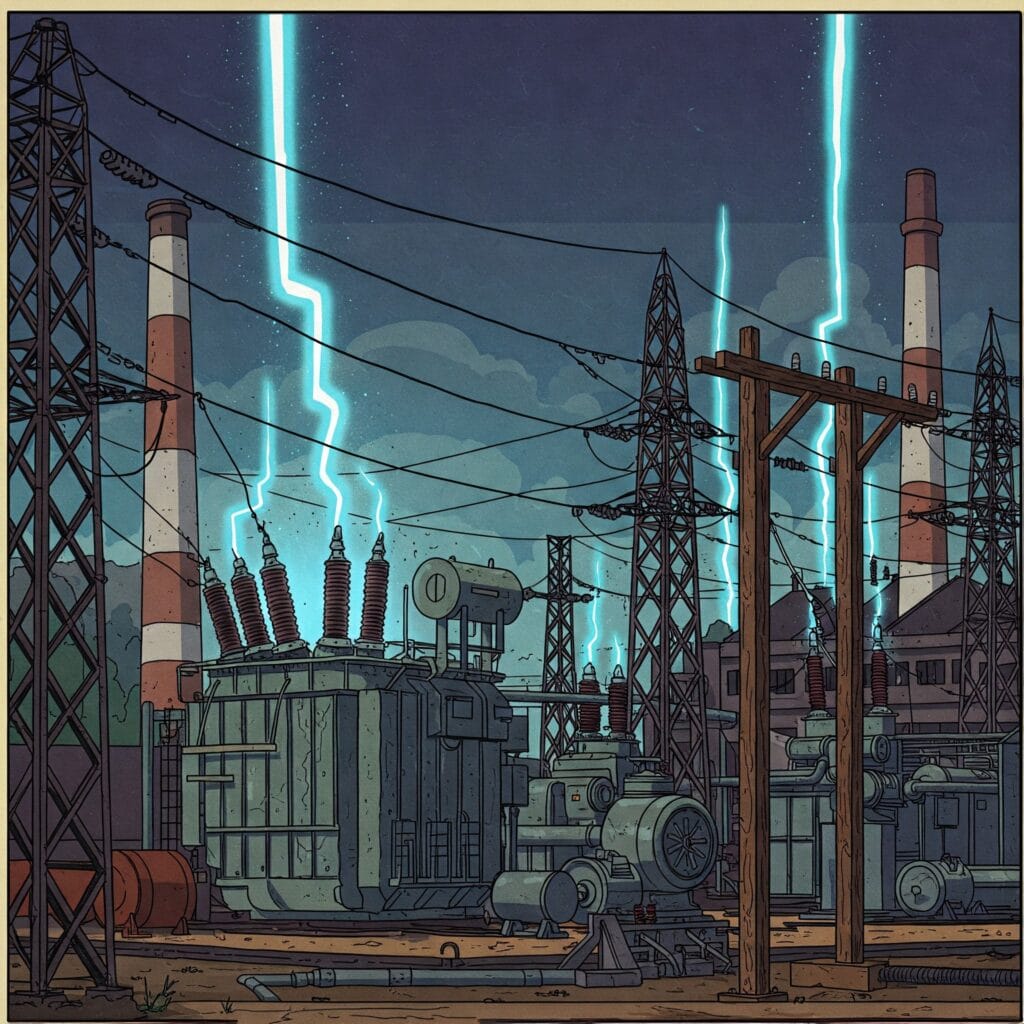
Industrial Electricity Applications
- Manufacturing: Industrial electricity powers machinery and production equipment in factories and plants.
- Construction: Industrial electricity supplies energy for construction machinery and equipment.
- Transport: Industrial electricity is used in rail, road, waterway and aviation systems.
- Services: Industrial electricity supplies energy to shopping centres, hospitals, schools and other service facilities.
Components of an Industrial Electrical System
- Power sources: Power plants (thermal, hydro, wind and solar) and substations.
- Transmission system: High-voltage lines and transmission substations.
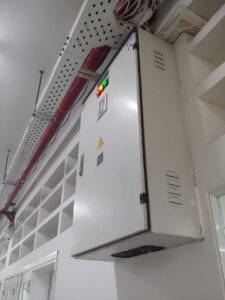
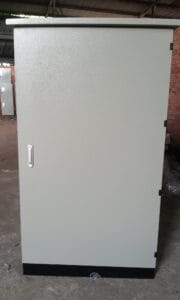
- Distribution system: Medium- and low-voltage lines, distribution substations, cable tray and ladder systems and electrical enclosures.
- End-use system: Electrical equipment and lighting systems in factories, plants, construction projects and service facilities.

The Role of Industrial Electricity in Economic Development
Industrial electricity plays an important role in national economic development. It provides the energy foundation for economic sectors, creates jobs and raises productivity, while also supporting urbanisation and modernisation.
Industrial Electricity Development Trends
- Renewable-energy growth: Wind and solar power are increasingly developed and used in industrial electricity.
- Smart technology: IoT and AI improve the management and operation of industrial power systems, increasing efficiency and reliability.
- Energy efficiency: Energy-saving solutions reduce costs and protect the environment across industrial sectors.
Industrial electricity cannot be discussed without cable tray and ladder systems for cable management. They act as the “transport network” for electrical cables in facilities and factories. Selecting and installing them correctly improves safety, uses space efficiently, reduces cost and enhances project appearance. We hope this article has explained industrial electricity and the importance of cable tray systems.
If you need cable tray and ladder systems for an industrial electrical installation, contact The Sun. We are a reliable manufacturer supplying quality systems to meet customer requirements.
Contact information:
THE SUN JOINT STOCK COMPANY
Tax code: 3700 919 919
Address: 16th Floor, Becamex Tower, 230 Binh Duong Boulevard, Phu Hoa Ward, Thu Dau Mot City, Binh Duong Province, Vietnam
E-mail: info@thesun.vn
Phone: 0274 3969 848 – 0274 3969 849
Zalo/Mobile: 0903 988 018
Zalo/Mobile: 0903 988 010
Thank you sincerely!