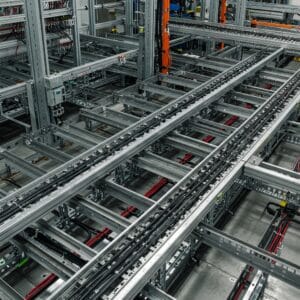
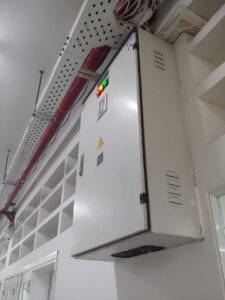
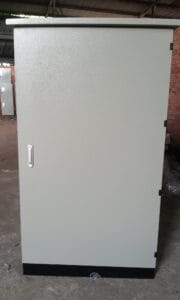
A solid-bottom cable tray is a support system used to organise, protect and manage power and data cables in buildings and infrastructure. Selecting the correct cable tray for the installation environment is critical because it directly affects electrical safety, durability and the service life of the project. The following guide compares indoor vs outdoor cable trays and explains how to select the correct system.
1. Indoor Solid-Bottom Cable Trays
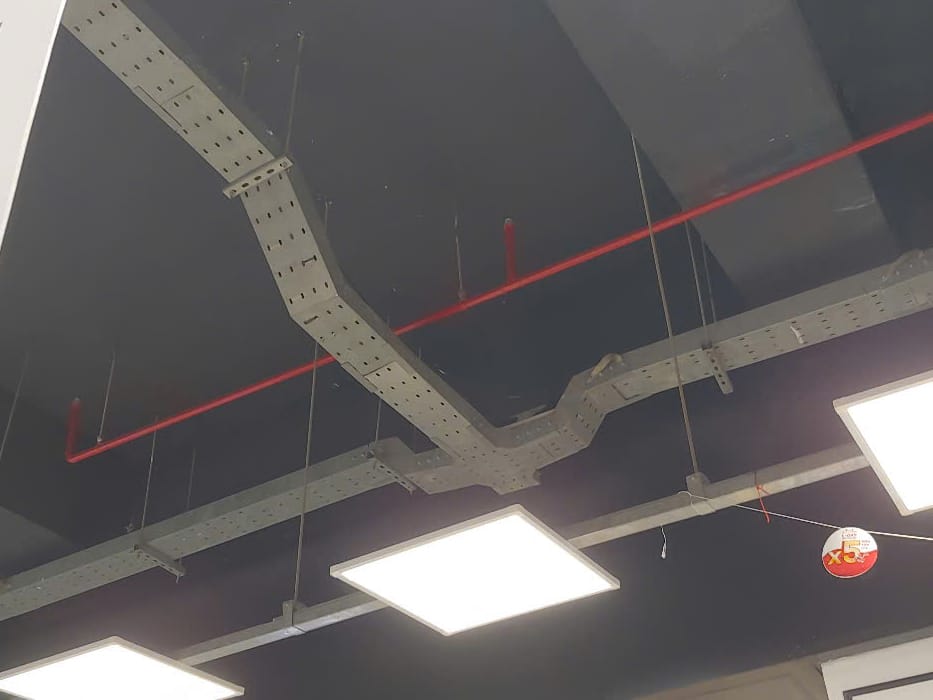
This type of cable tray is designed for dry, sheltered environments without direct exposure to weather.
- Installation environment:
- Inside office buildings, apartment complexes and shopping centres.
- Factories, warehouses and basements.
- Data centres and server rooms.
- Materials and surface treatment:
- Powder-coated steel: This is the most common choice for indoor environments. The powder coating provides a durable, attractive surface with basic scratch and corrosion resistance, while a range of colours can match the project aesthetic.
- Pre-galvanised steel: The sheet is coated with a thin zinc layer before being formed into a tray. It resists rust better than untreated mild steel and is suitable for moderately humid spaces such as basements.
- Characteristics:
- Appearance: Typically smooth, with a choice of colours.
- Cost: Lower than an outdoor cable tray system.
- Installation: Lower weight makes handling and installation easier.
- Load capacity: Standard material thickness supports typical cable loads.
2. Outdoor Solid-Bottom Cable Trays

Outdoor cable trays are specially manufactured to withstand rain, sunlight, wind, high humidity and corrosive agents.
- Installation environment:
- Outdoor cable routes between buildings.
- Electrical systems in industrial zones and chemical plants.
- Bridges, transport infrastructure and ports.
- Solar-power systems and solar farms.
- Materials and surface treatment:
- Hot-dip galvanised steel: This is the most common and effective solution for outdoor use. After fabrication, the complete tray is immersed in molten zinc. The thick, bonded zinc layer provides durable protection against corrosion and rust, including at cut edges and punched holes.
- Stainless steel (Stainless Steel): Usually grade 304 or 316. This material offers excellent corrosion resistance and is particularly suitable for marine environments or highly corrosive chemical plants, although stainless-steel cable trays cost considerably more.
- Aluminium or composite: Used for specialised applications that require low weight and high resistance to chemical corrosion.
- Characteristics:
- Excellent durability: Resists corrosion, oxidation and UV exposure.
- Long service life: A hot-dip galvanised coating can protect steel structures for decades.
- Heavy-load capacity: Outdoor trays are often made from thicker steel to support heavy external cable routes securely.
- Cost: Significantly higher than indoor trays because of the material and more demanding surface-treatment process.
3. Quick Comparison Table
| Criterion | Indoor cable tray | Outdoor cable tray |
| Environment | Dry, sheltered and low humidity. | Direct weather exposure, high humidity or corrosive conditions. |
| Main material | Sheet steel. | Sheet steel, stainless steel or aluminium. |
| Surface treatment | Powder coating or pre-galvanising. | Hot-dip galvanising, stainless steel (2B/BA finish) or anodised aluminium. |
| Corrosion resistance | Moderate. | Very good to excellent. |
| Appearance | High-quality smooth finish in many colours. | Galvanising typically produces a textured silver-grey surface; stainless steel is bright and attractive. |
| Cost | Low. | High. |
| Typical applications | Office buildings, apartments, factories and data centres. | Industrial zones, bridges, chemical plants and solar-power systems. |
4. Conclusion and Recommendations
Selecting the wrong cable tray type can have serious consequences:
- Using an indoor tray outdoors can cause rapid corrosion and deterioration, damage cables and create electrical hazards.
- Using an outdoor tray indoors can add unnecessary cost.
Engineers and project owners should therefore assess the installation environment, load requirements and corrosive factors carefully. Selecting the correct cable tray protects electrical safety and stability, optimises cost and supports a long project service life.