
Modern factories require complex, safe and efficient electrical and communications networks. Systematically managing cables and conduits is essential for productivity, workplace safety and a professional production environment. The optimal solution is to use cable trays. This guide explains cable trays for factories in Hanoi and Ho Chi Minh City, highlighting safety, organisation and cost savings.
I. The Important Role of Cable Trays in Factories:
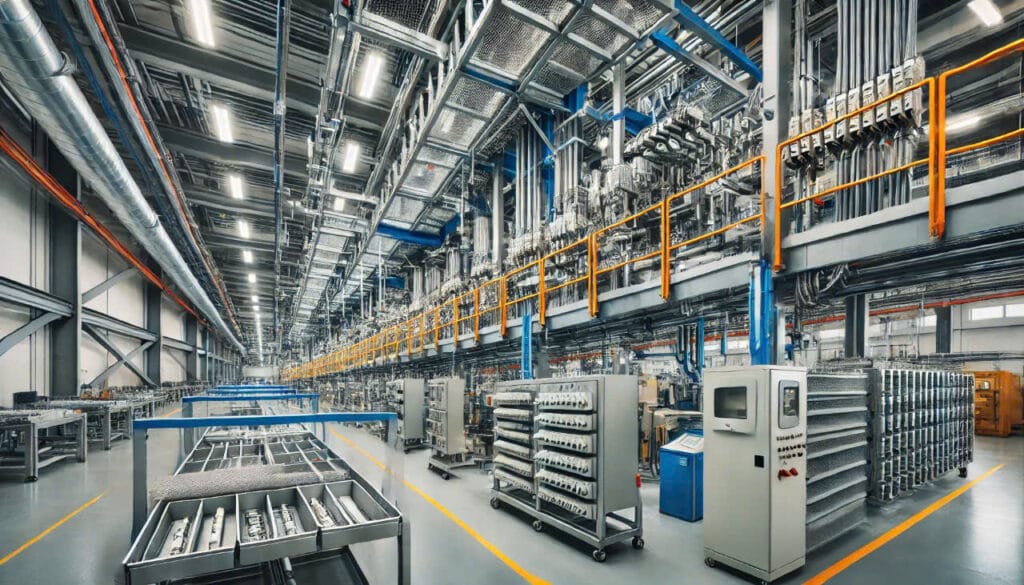
In a factory environment with dense cables and conduits, cable trays are not only an optimal solution but also essential for:
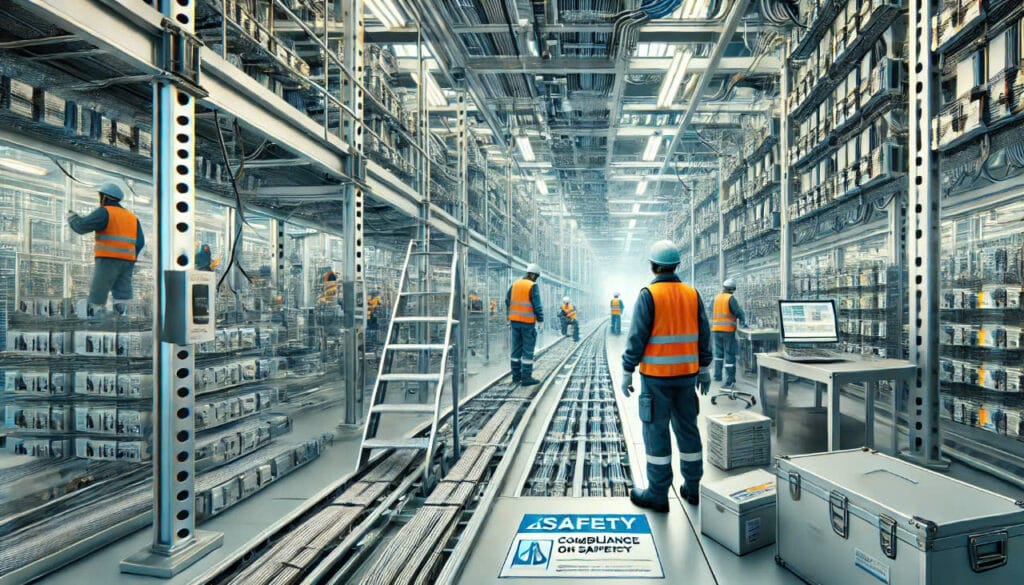
- Workplace safety: Cable trays for factories protect conductors from impact, foot traffic, rodents and environmental corrosion. This reduces faults, short circuits and fire risks, protecting workers and business assets. In busy plants with forklifts and machinery, trays significantly reduce the chance of cable damage.
- Efficient cable management: Cable trays for factories keep cables neat and accessible for inspection, maintenance and repair. Classifying and labelling cables speeds troubleshooting and reduces production downtime.
- Better appearance: Unorganised cables create safety issues and detract from the factory appearance. Cable trays create a clean, modern and professional workplace that strengthens the company image.
- Cost savings: Although installation requires an initial investment, trays reduce long-term repair and replacement costs while improving factory efficiency.
- Easy expansion and maintenance: A flexible tray system can be expanded or adjusted as equipment changes, making maintenance and repairs faster and less labour-intensive.
II. Common Cable Tray Types for Factories:
Many cable tray types are available for different factory requirements and conditions. Common options include:
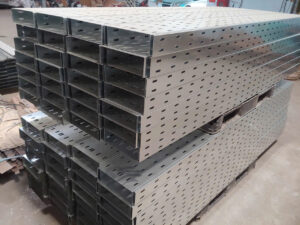
- Steel cable trays: Made from galvanised or stainless steel, they offer high strength and load capacity for harsh environments and heavy-duty factories.
- Aluminium cable trays: Lighter and easier to install than steel, with good corrosion resistance for projects requiring low weight and an attractive finish.
- PVC cable trays: Affordable, lightweight and easy to install, but less durable and load-resistant than steel or aluminium; suitable for small, low-load factories.
- Wire mesh cable trays: Made from steel or aluminium, the mesh design improves ventilation and reduces cable temperature in dense cable routes.
The right cable tray depends on several factors, including:
- Cable types: Cable size, weight and quantity.
- Operating environment: Humidity, temperature and chemical conditions.
- Durability and safety: Load, strength and corrosion-resistance requirements.
- Budget: The cost of different tray types.
III. Choosing a Reliable Cable Tray Supplier in Hanoi and Ho Chi Minh City:
A reputable supplier is essential to product and service quality. Consider the following when selecting one:
- Reputation and experience: Choose suppliers with many years in cable trays and a strong project record.
- Product quality: Products should meet quality standards and include complete CO and CQ certificates.
- Competitive pricing: Compare several suppliers to find the most suitable price.
- After-sales service: Look for strong warranty, maintenance and customer support policies.
- Technical advice: Experienced technicians should help customers select the appropriate tray.
IV. Cable Tray Installation Process for Factories:
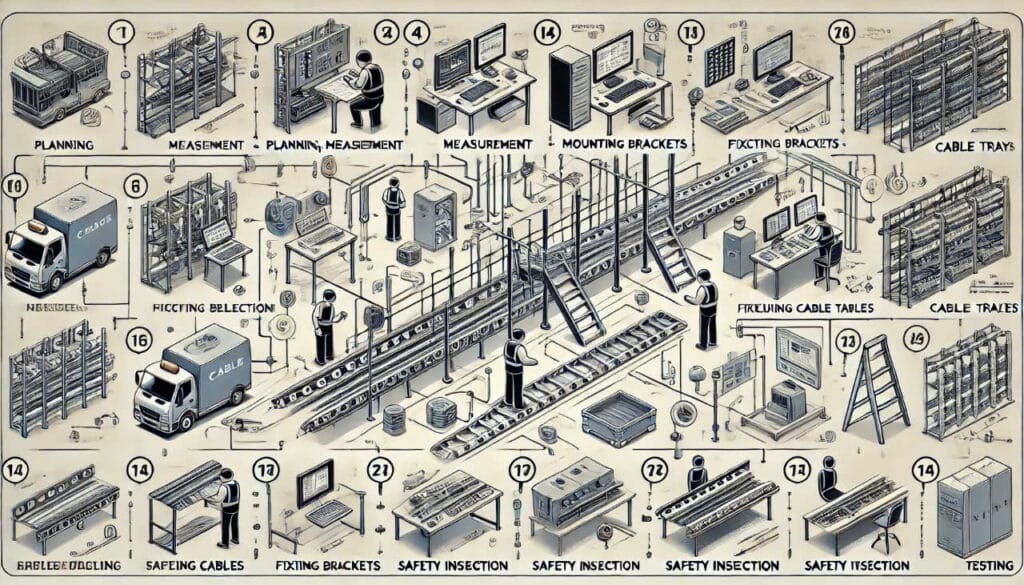
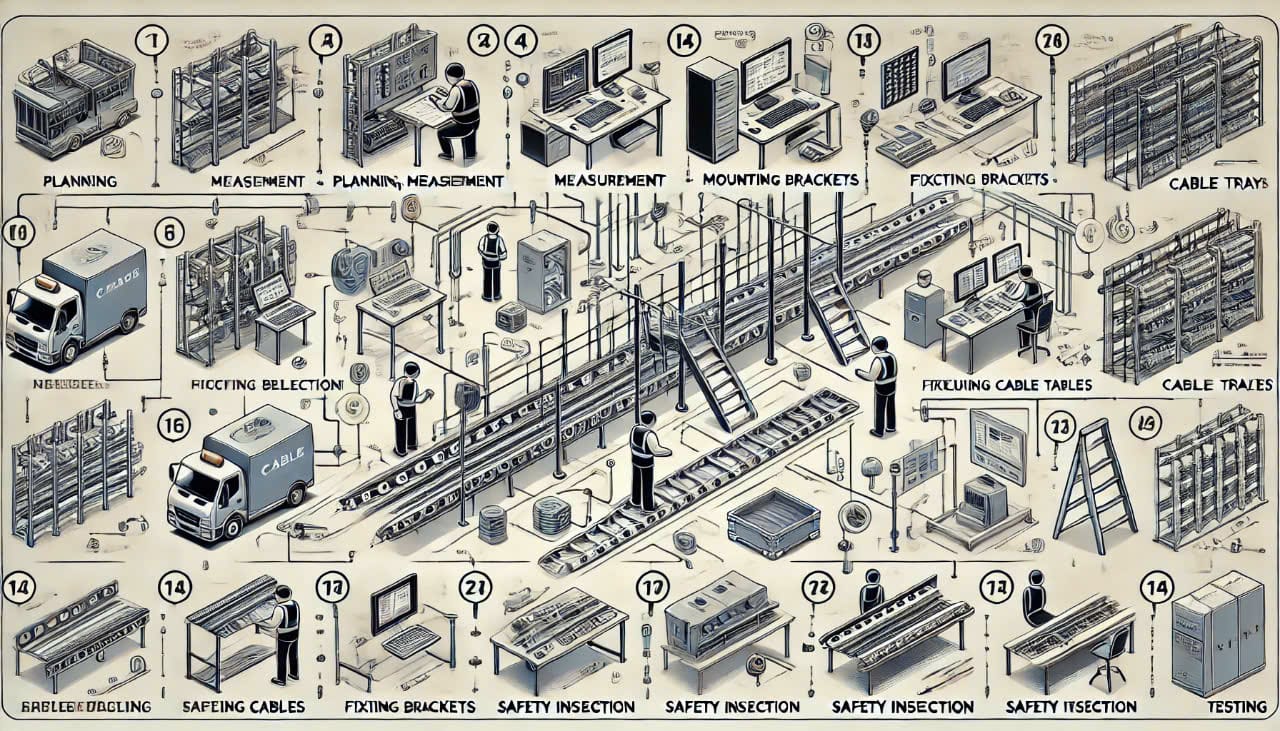
Factory cable tray installation requires professional workmanship and technical expertise to ensure safety and performance. The process typically includes:
- Survey and design: Measure existing cable routes and design a tray system for the factory requirements.
- Install main trays: Install main sections along walls, ceilings or floors.
- Install branch trays: Route branch sections from the main tray to required points.
- Install accessories: Fit elbows, tees and reducers to keep the system stable and safe.
- Route and terminate cables: Arrange and connect cables neatly and systematically in the trays.
- Inspect and commission: Check the complete system after installation for safety and performance.
For factory cable tray installation standards, see: TCVN 9208
V. Saving Costs with Cable Trays:
Although the initial investment may exceed direct cable routing, trays deliver substantial long-term savings through:
- Fewer failures: Protect cables from external impacts and reduce repair and replacement costs.
- Higher efficiency: Manage cables effectively, shorten troubleshooting time and increase productivity.
- Easy expansion and maintenance: Add or remove cables without replacing the entire system.
VI. Conclusion:
Cable trays for factories are an optimal way to manage cable systems, ensure workplace safety, reduce cost and improve the production environment. Choosing the right tray and a reputable supplier is essential. We hope this guide helps you select and install an effective cable tray system for your factory in Hanoi or Ho Chi Minh City. Contact a trusted supplier for technical advice and a suitable quotation. Investing in a quality cable tray system protects your factory and supports reliable operation.