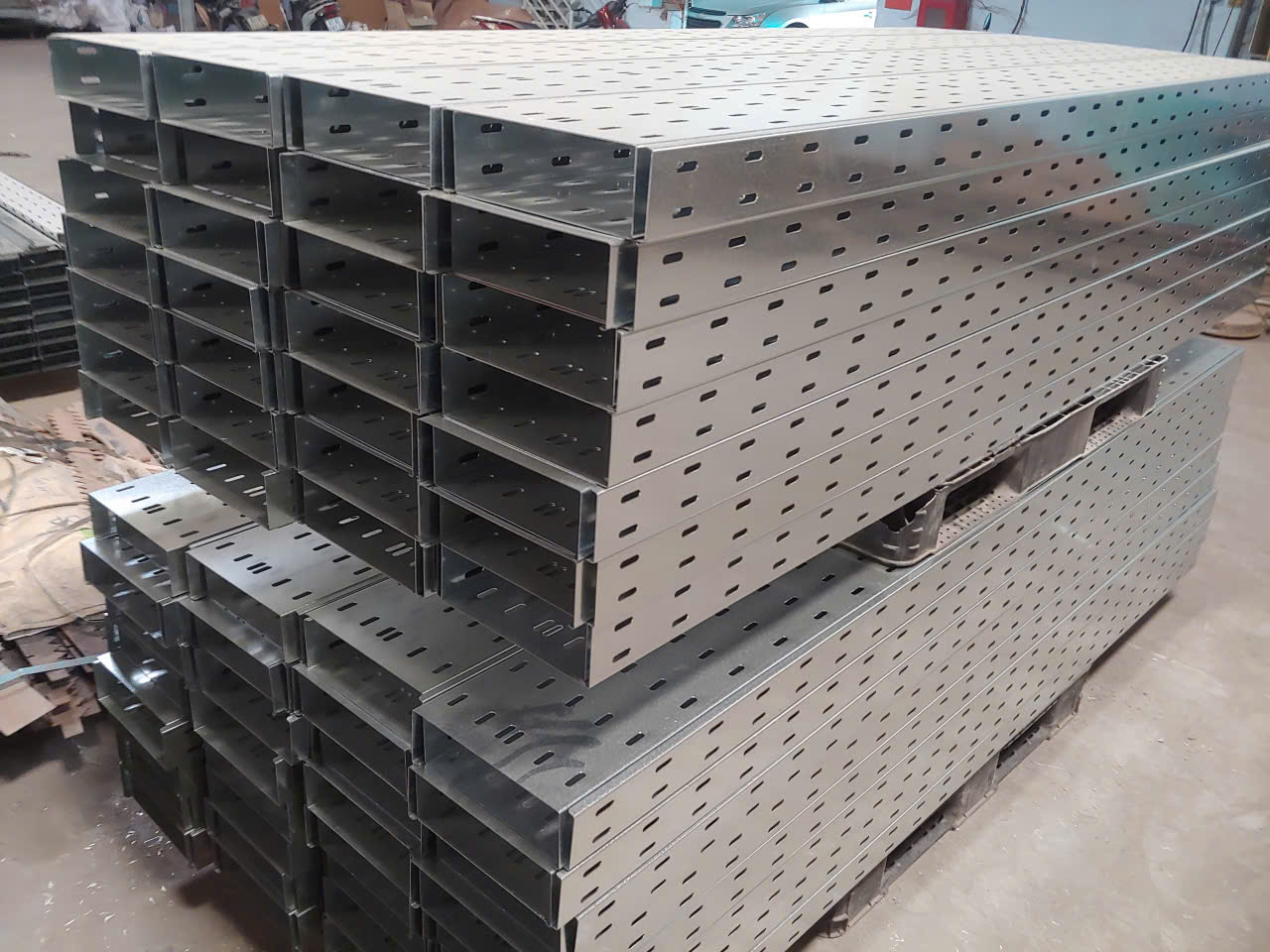

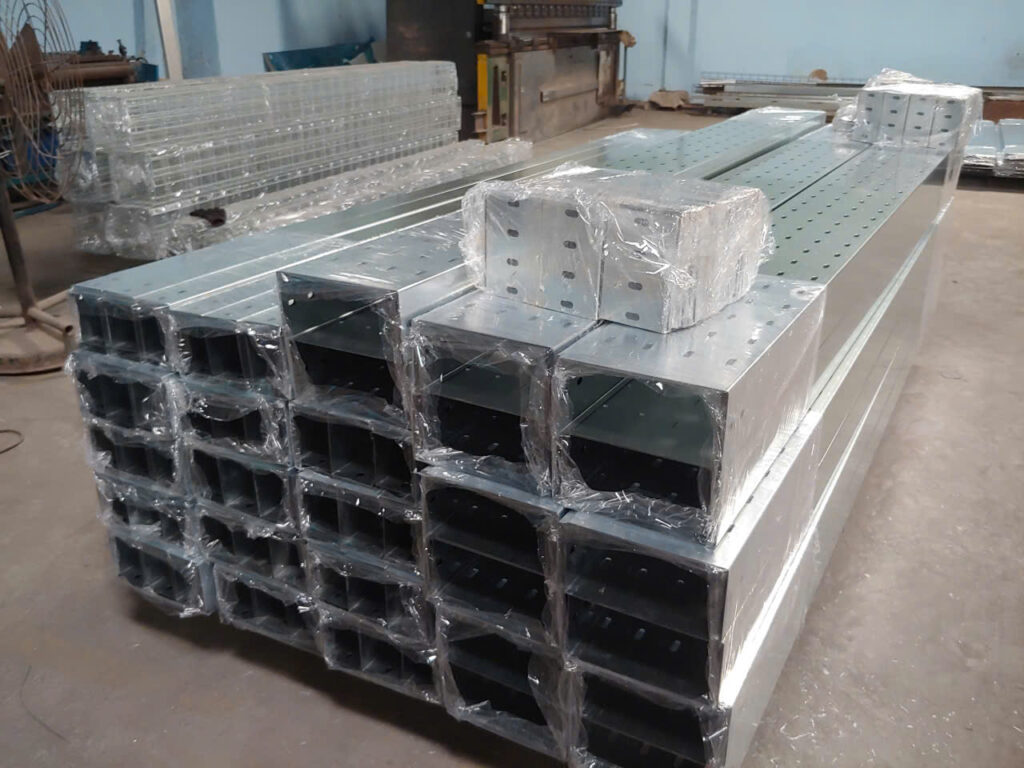
ZAM steel cable trays and trunking (hot-dip galvanized or electro-galvanized steel) are widely used in industrial and commercial electrical installations because of their strong corrosion resistance. However, many project owners and contractors still ask: should ZAM cable trays and trunking be painted? This guide examines the issue in detail so you can make the right decision before installation.
💡 If you are not yet familiar with ZAM steel, its coating structure or common coating designations such as Z180 and Z275, see ZAM Steel and Cable Trunking: The Self-Healing Material Trend. This article focuses specifically on whether an additional paint coating is necessary.
- 1. Why Consider Painting ZAM Cable Trays and Trunking?
- 2. Should ZAM Cable Trays and Trunking Be Painted?
- 3. When Should an Additional Protective Coating Be Applied?
- 4. Important Considerations When Painting ZAM Cable Trays and Trunking
- 5. Quick Comparison: Painted vs Unpainted
- 6. Conclusion
- Frequently Asked Questions (FAQ)
1. Why Consider Painting ZAM Cable Trays and Trunking?
The key to deciding whether painting is required lies in the sacrificial protection (cathodic protection) provided by the zinc coating. Zinc corrodes before the underlying steel and therefore protects the steel core even when the surface is lightly scratched. According to the technical explanation from the American Galvanizers Association, the metallurgical bond between zinc and steel creates an electrochemical circuit that continues protecting exposed steel when the coating is locally scratched or damaged. This is why ZAM cable trays and trunking normally require no additional paint under standard conditions. In certain demanding environments, however, the metallic coating may benefit from an additional protective paint layer.

2. Should ZAM Cable Trays and Trunking Be Painted?
The short answer is that an additional paint coating is not required in most applications. The metallic surface coating already acts as a natural corrosion barrier and meets the technical requirements of most residential buildings, factories, office buildings and shopping centres.
The final decision nevertheless depends on the following factors:
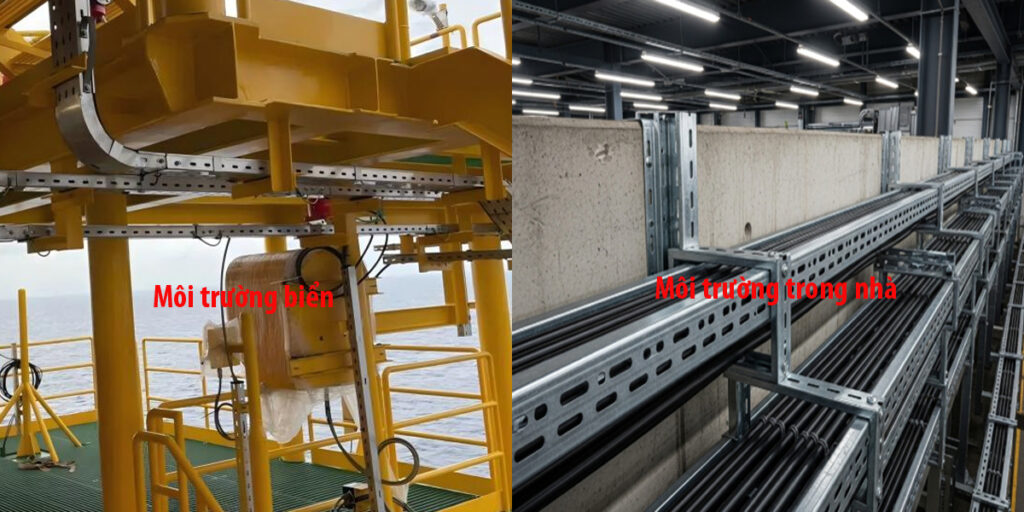
2.1. Installation environment
- Dry indoor environments with little exposure to corrosive chemicals: painting is unnecessary, and ZAM cable trays and trunking can perform reliably for many years without deterioration.
- Wet or coastal environments exposed to salt-laden air or industrial chemicals (including chemical, wastewater-treatment and food-processing plants): consider an epoxy coating or a cable-support system with a heavier post-fabrication hot-dip galvanized coating for increased corrosion resistance.
2.2. Appearance and project colour coordination
Some facilities, including data centres, hospitals and showrooms, require technical infrastructure to follow a coordinated colour scheme such as white, grey or blue. In these applications, applying a powder coating to ZAM cable trays and trunking is a suitable solution. It provides the required appearance without compromising the inherent corrosion protection of the metallic coating.
2.3. Project-owner requirements and technical specifications
Many tender documents and technical specifications clearly define the required surface treatment for galvanized cable-support systems. Contractors should review the approved specifications and technical drawings to determine whether paint is required and avoid deviating from the approved design.
3. When Should an Additional Protective Coating Be Applied?
An additional coating should be considered in the following situations:
- Outdoor installation with direct exposure to sunlight, rain and salt-laden air.
- Areas exposed to strongly corrosive chemicals or industrial emissions.
- Buried cable tray or trunking systems exposed to soil or water.
- Projects requiring colours that comply with corporate identity standards or interior-design specifications.
- Specialized facilities such as cleanrooms and pharmaceutical plants that require an easy-to-clean, dust-resistant finish.
4. Important Considerations When Painting ZAM Cable Trays and Trunking
If an additional coating is selected, observe the following requirements:
- Prepare the surface before painting: remove oil, grease and dust. Light abrasion and a primer designed for galvanized surfaces, such as an etching primer, may be required to improve adhesion. The smooth metallic surface can cause conventional paint to peel if it is not prepared correctly.
- Select a compatible coating: use an epoxy system or powder coating specifically designed for galvanized metal surfaces instead of conventional oil-based paint.
- Avoid excessive coating thickness: an unnecessarily thick coating can reduce heat dissipation and may peel over time.
- Follow the specified application process: factory-applied powder coating before installation normally offers better durability and appearance than manual painting on site.
5. Quick Comparison: Painted vs Unpainted
| Criterion | Unpainted | Painted or coated |
|---|---|---|
| Cost | Lower | Higher due to the additional coating process |
| Basic corrosion resistance | Good, provided by the metallic coating | Better in aggressive environments |
| Appearance | Characteristic metallic silver finish | Wide range of colours to specification |
| Suitable environment | Dry indoor locations | Wet, coastal or chemical environments and colour-coordinated projects |
| Installation lead time | Short; ready for immediate installation | Additional time required for surface preparation and coating |
6. Conclusion
In general, the answer to “should ZAM cable trays and trunking be painted?” is no, not under normal environmental conditions. The metallic coating already provides effective corrosion protection. Additional painting becomes necessary mainly where the installation faces wet, chemical or coastal exposure, or where the project requires a coordinated colour and appearance.
Before making a decision, review the approved design documents and consult an experienced cable tray and trunking manufacturer. This will help you select the most appropriate material and surface treatment for the installation environment while achieving the required service life and controlling project costs.
Frequently Asked Questions (FAQ)
1. Will ZAM cable trays and trunking eventually rust? In a dry environment, the metallic coating can protect the steel substrate for many years or even decades, depending on its coating mass and thickness. Service life is shorter in aggressive environments unless additional protection is provided.
2. Does painting ZAM cable trays and trunking remove the corrosion protection provided by the metallic coating? No. When a compatible coating is applied correctly to the prepared galvanized surface, it adds another protective barrier without eliminating the protection provided by the underlying metallic coating.