In modern industry, electrical systems are essential to operating equipment and production lines. Safe, systematic protection and management of power cables are therefore critical. A heavy-duty cable tray system provides an effective solution for maintaining operational reliability and safety in industrial electrical installations.
What Is a Heavy-Duty Cable Tray System?
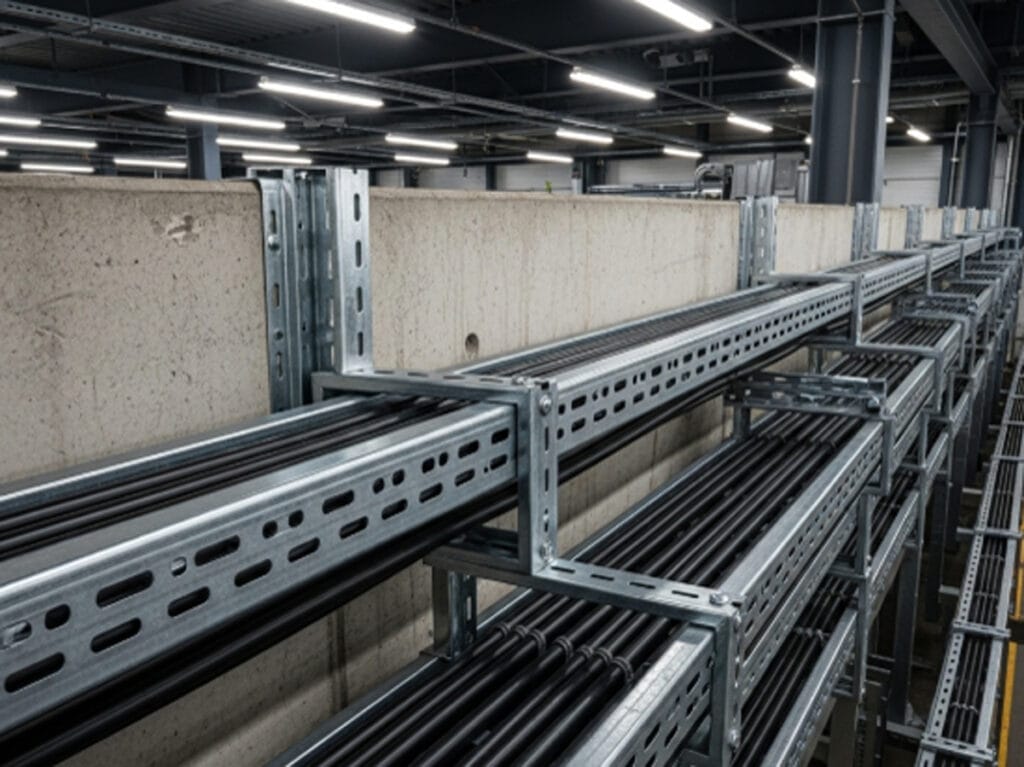
A heavy-duty cable tray is specially engineered to support a large combined weight of heavy power cables. Unlike conventional systems, a heavy-duty cable tray and ladder system uses robust construction, durable materials and an optimised structural design to provide reliable load capacity in demanding industrial environments.
Key Advantages of Heavy-Duty Cable Tray Systems
- Exceptional load capacity
A heavy-duty cable tray can support many large, heavy cables without deformation or damage. This reduces risk in high-capacity electrical systems. - Durable, corrosion-resistant construction
Heavy-duty cable trays are commonly made from galvanised steel or stainless steel, providing corrosion resistance and a longer service life under harsh industrial conditions. - Easy installation and maintenance
A simple but robust design makes installation fast and practical. The open support system also allows cables to be inspected, maintained, added or removed without disrupting the overall installation. - Efficient use of space and a professional appearance
Cable trays and ladders organise routes neatly, optimise factory space and create a clean, professional installation.
Industrial Applications of Heavy-Duty Cable Tray Systems
- Large manufacturing plants: Supports the high loads imposed by main power cables in electrical distribution systems.
- Data centres and server facilities: Maintains stability and safety in complex power systems.
- Renewable-energy power systems: Manages high-load cable routes in solar power and wind-power plants.
- Construction and transport infrastructure: Supports safe, well-organised industrial power cable installations.



Criteria for Selecting a Heavy-Duty Cable Tray System
- Material: Prioritise hot-dip galvanised steel or 304/316 stainless steel where greater corrosion resistance is required.
- Load capacity: Calculate the total cable weight and select a system with an appropriate rated load.
- Dimensions and design: Match the available project space and the types of electrical cable being supported.
- Quality standards: Select products from a reputable manufacturer that comply with international electrical-safety requirements. See the cable tray test results under applicable standards.
Conclusion
Selecting a heavy-duty cable tray system for an industrial electrical installation protects cables, extends their service life and improves operational safety. Investing in a high-quality cable support system is a practical way to increase production efficiency, reduce accident risks and minimise unplanned repair costs.
If you need an effective industrial cable-management solution, choose a correctly rated heavy-duty cable tray system to keep the electrical installation stable, safe and durable over its service life.