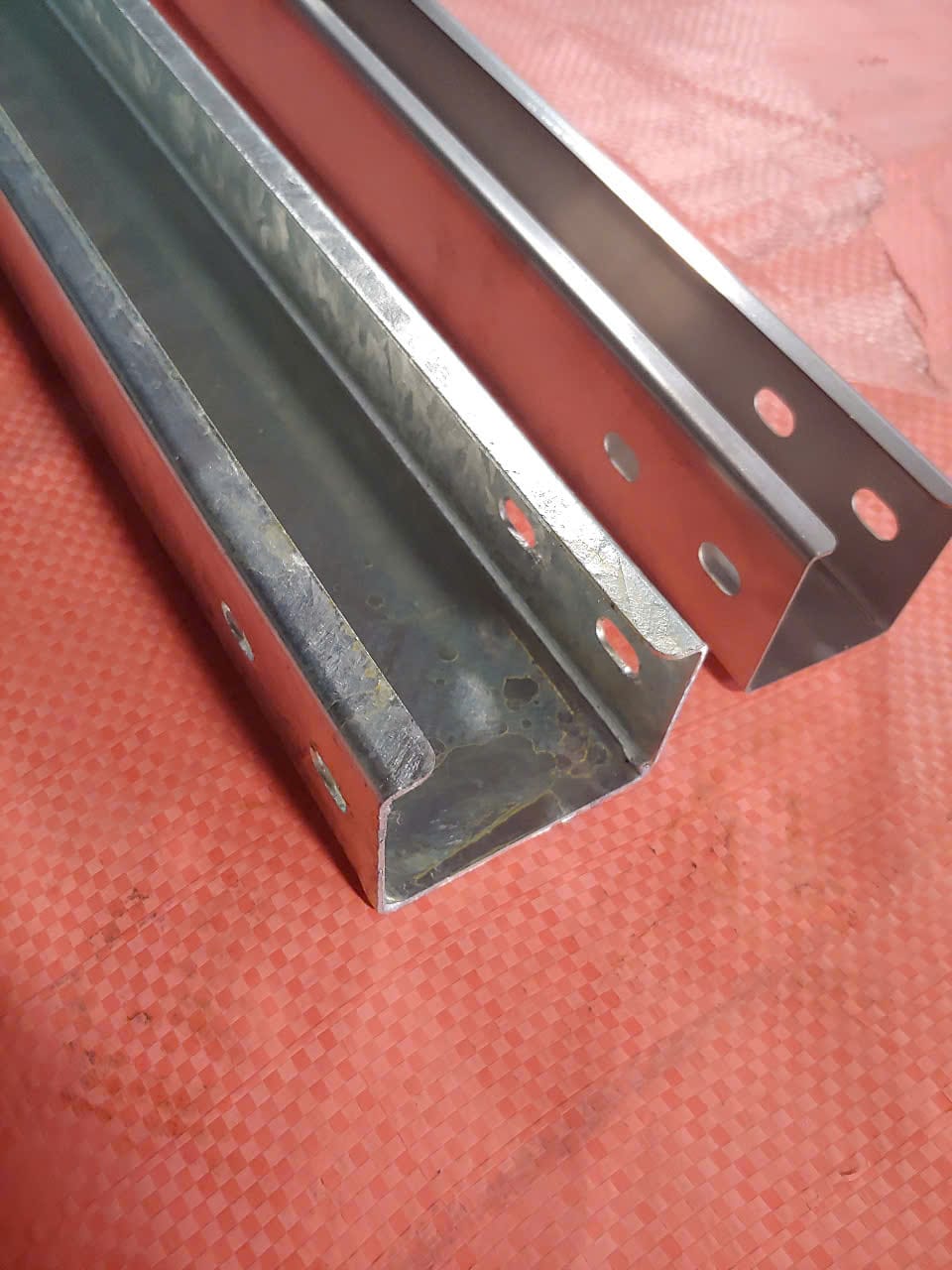

Hot-dip galvanised cable tray and stainless-steel cable tray are both popular cable-management solutions, each with distinct advantages and limitations. This hot-dip galvanised vs stainless-steel cable trays comparison explains the key differences. Watch this video comparing the two types:
Overview of Hot-Dip Galvanising and Stainless Steel
What Is Hot-Dip Galvanising?
Hot-dip galvanising coats a metal surface, usually steel, with zinc by immersing it in a bath of molten zinc. The process creates a protective coating that resists corrosion and extends the metal’s service life.
Process:
- The metal is thoroughly cleaned to remove dirt, grease and other contaminants.
- The metal is then immersed in molten zinc at approximately 450°C.
- At this temperature, zinc reacts with the metal surface to form a tightly bonded zinc–iron alloy layer.
- After immersion, the metal is cooled and inspected for quality.
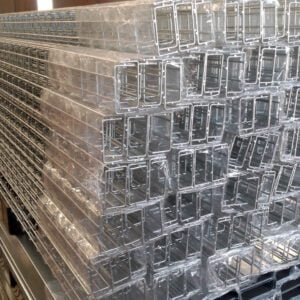
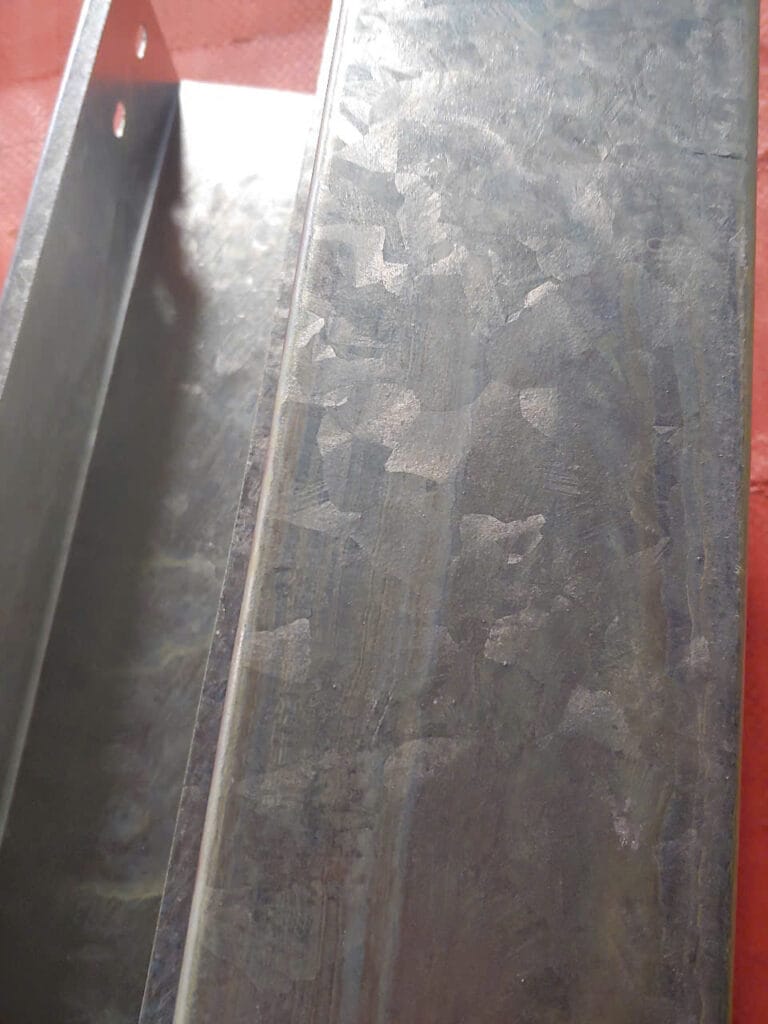
Hot-dip galvanised steel is widely used where corrosion resistance is needed without the cost of stainless steel, offering excellent lifecycle value. Its surface can be identified by crystalline patterns commonly called “spangle”. The image below shows a hot-dip galvanised steel surface:
What Is Stainless Steel?
Stainless steel is an iron alloy containing at least 10.5% chromium. Chromium forms a thin, durable chromium-oxide film on the surface, protecting the alloy from corrosion and rust.
Here are key facts about stainless steel:
Main components:
- Iron (Fe): The primary component of stainless steel.
- Chromium (Cr): At least 10.5%, providing corrosion resistance.
- Nickel (Ni): Improves corrosion resistance and ductility.
- Other elements: Molybdenum (Mo), manganese (Mn), carbon (C) and others.
Common stainless-steel grades:
- 304 stainless steel: The most common grade, with good corrosion resistance and easy fabrication.
- 316 stainless steel: Superior corrosion resistance, especially in salt and chemical environments.
- 201 stainless steel: Lower cost, but lower corrosion resistance.
- 430 stainless steel: Magnetic and commonly used where corrosion resistance requirements are modest.
The image below shows a brushed 304 stainless-steel surface:

For a clearer overview of hot-dip galvanised and stainless-steel cable trays, the following section compares these two cable tray options in detail:

Comparing Hot-Dip Galvanised and Stainless-Steel Cable Trays
1. Hot-Dip Galvanised Cable Tray:
- Advantages:
- High corrosion resistance: The thick hot-dip galvanised coating protects the tray from environmental corrosion, including harsh conditions.
- High durability: The hot-dip galvanised surface is hard and robust, helping the tray withstand impact and mechanical stress.
- Lower cost: Hot-dip galvanised trays are generally less expensive than stainless-steel trays.
- Disadvantages:
- Appearance: Hot-dip galvanised trays may not have the bright, premium appearance of stainless-steel trays.
2. Stainless-Steel Cable Tray:
- Advantages:
- Superior corrosion resistance: Stainless steel performs exceptionally well, particularly in chemical and marine environments.
- Premium appearance: Stainless-steel trays have a bright, attractive finish for projects with demanding aesthetic requirements.
- Mechanical strength: Withstands substantial mechanical loads.
- Disadvantages:
- High cost: Stainless-steel trays generally cost more than hot-dip galvanised trays.
Which Cable Tray Should You Choose?
The choice of cable tray depends on the following factors:
- Installation environment: For highly corrosive conditions such as marine or chemical environments, stainless steel is preferable. For normal environments, hot-dip galvanised steel is sufficient.
- Appearance requirements: Choose stainless steel where a premium appearance is important.
- Budget: Hot-dip galvanised steel is the more economical option when the budget is limited.
- Mechanical strength: Both hot-dip galvanised and stainless-steel trays are suitable where mechanical loads are high.
We hope this comparison of hot-dip galvanised and stainless-steel cable trays helps you select the right cable tray or cable tray and ladder system for your project.
In summary, both hot-dip galvanised and stainless-steel cable trays have distinct advantages and limitations. The best choice depends on each project’s specific requirements.