
Stainless steel 304 cable trunking is fabricated from austenitic grade 304 stainless steel and is commonly used in food and pharmaceutical plants, cleanrooms, and areas requiring an easy-to-clean surface or better corrosion resistance than conventional carbon steel.
Actual performance depends on the stainless steel grade, surface finish, component design, cleaning chemicals, temperature, chlorides, and maintenance regime. Stainless steel 304 is not a material that “never rusts”; in marine, high-chloride, or special chemical environments, stainless steel 316 or another specialist material should be evaluated.
The Sun manufactures stainless steel 304 cable trunking to project dimensions, thicknesses, construction details, and drawings, complete with matching covers, joints, and fittings.
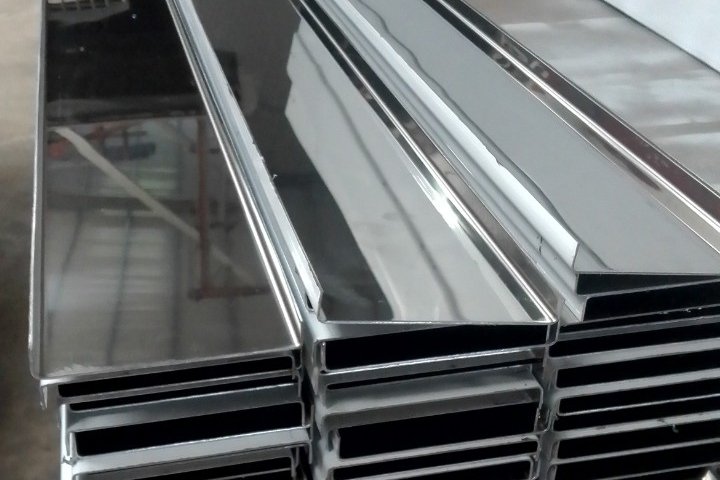
1. What Is Stainless Steel 304 Cable Trunking?
Stainless steel 304 cable trunking is an enclosed cable-management product made from grade 304 stainless steel. An optional cover can be used to contain, organize, and protect cable routes. The material contains chromium and nickel within the grade’s specified ranges, enabling a chromium-rich passive film to form on the surface.
The passive film can reform when the surface is clean and suitable oxidizing conditions are present. Oil, chemical residue, iron contamination, chlorides, or moisture-retaining crevices can reduce corrosion resistance.
2. Why Is Stainless Steel 304 Used for Cable Trunking?
- Good corrosion resistance: suitable for many indoor and light-industrial environments.
- Easy-to-clean surface: no painted layer that can peel.
- No painting or galvanizing required: reduces the risk of an external coating flaking during service.
- Consistent appearance: suitable for exposed technical areas or installations requiring a clean metallic surface.
- Versatile fabrication: can be cut, formed, welded, and finished to drawings.
These advantages do not automatically mean that a product satisfies every factory’s hygiene requirements. Cleanability also depends on drainage design, surface smoothness, weld quality, joints, crevices, and the cleaning procedure.
3. Which Projects Is Stainless Steel 304 Cable Trunking Suitable For?
- Food and beverage plants: areas requiring frequent cleaning, subject to the specific design requirements.
- Pharmaceutical plants and cleanrooms: where the material, finish, and construction meet project documentation.
- Electronics plants: technical areas requiring a clean surface without a coating that may flake.
- Water treatment: depending on water composition, chemicals, and chloride concentration.
- Exposed architectural or technical areas: where a uniform stainless steel surface is required.
Grade 304 should not automatically be specified for acids, strong alkalis, seawater, or high-chloride environments. Each chemical agent should be checked against material-compatibility data.

4. When Should Stainless Steel 316 Be Selected Instead of 304?
Stainless steel 316 contains molybdenum and generally offers better resistance to pitting and crevice corrosion than grade 304 in chloride environments. Grade 316 may be considered for coastal projects, saltwater exposure, chloride-containing chemicals, or more stringent material requirements.
Selection should not be based on grade name alone. Chemical concentration, temperature, exposure duration, rinsing, retained moisture, crevices, and required service life must be considered. Even grade 316 may require specialist assessment under severe conditions.
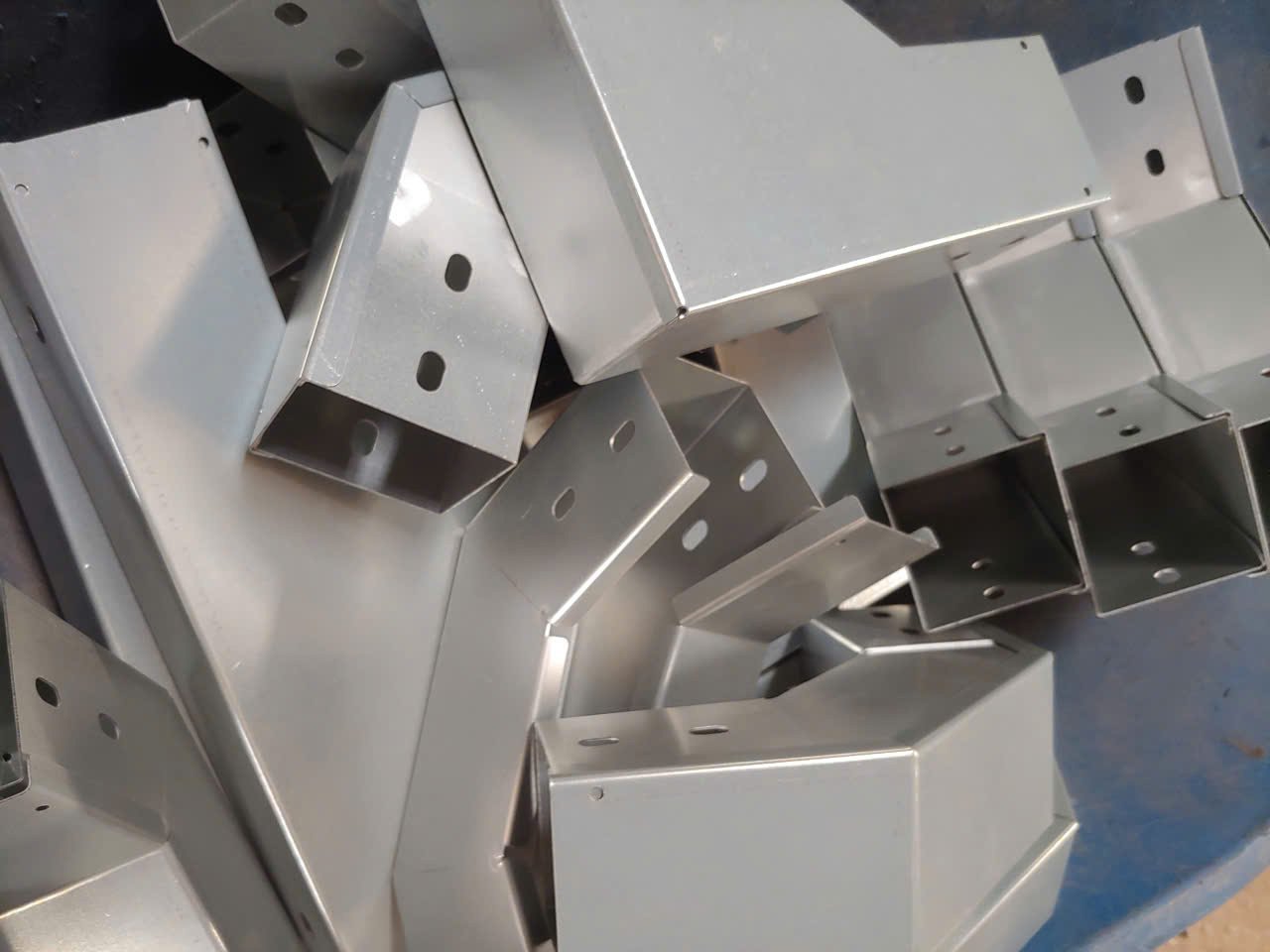
5. Construction and Matching Fittings
- Trunking body: contains and protects the cable route.
- Cover: used according to shielding and cleaning requirements.
- Joint: connects trunking sections into a continuous route.
- Fittings: horizontal elbows, risers, droppers, tees, crosses, and reducers.
- Support system: brackets, threaded rods, strut channels, and compatible connections.
6. Reference Technical Specifications
| Parameter | Reference specification |
|---|---|
| Product name | Stainless steel 304 cable trunking |
| Product type | Enclosed trunking, optional cover |
| Material | Stainless steel 304; stainless steel 316 where required |
| Surface | As specified: industrial mill finish, brushed, or another finish |
| Length | To manufacturing and transport requirements |
| Width W | To cable-route design |
| Height H | To cable-route design |
| Thickness T | To dimensions, load, and support spacing |
| Cover | With or without, depending on design |
| Fittings | Elbows, tees, crosses, reducers, joints, and support system |
| Fabrication | To specification or drawing |
Common dimensions
Sizes of 100 × 50, 200 × 50, 100 × 100, 200 × 100, 300 × 100, and 400 × 100 mm are frequently used. Final dimensions should be based on cable quantity and diameter, bending radius, fill ratio, future capacity, and installation space.
7. Selecting Thickness and Support Spacing
Stainless steel should not automatically be assumed to permit a thinner product than carbon steel. Load capacity depends on the steel grade, material condition, section geometry, cable load, support span, and installation orientation.
- Trunking W × H dimensions.
- Total cable load per meter of route.
- Support spacing and type.
- Horizontal, vertical, and directional routes.
- Construction loads and future capacity.
- Transport and installation conditions.
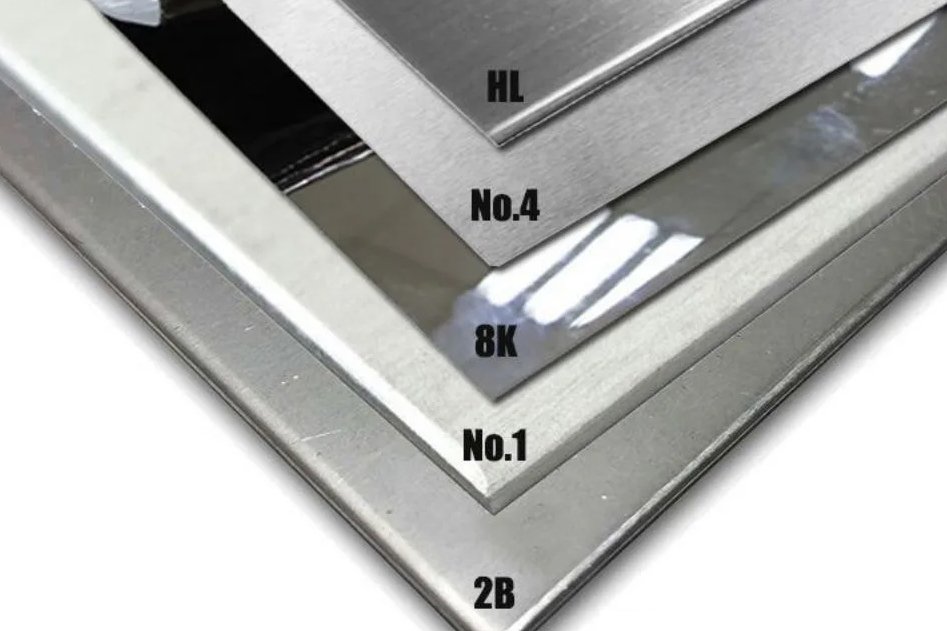
8. Common Stainless Steel Surface Finishes
Depending on the material and specification, stainless steel may have an industrial mill, matte, brushed, or polished finish. Cleanability does not depend on gloss alone; the surface should have few defects, be accessible, and suit the cleaning procedure.
Welded areas require appropriate treatment to remove heat tint, residue, and contamination. Where appearance or hygiene requirements are high, the finishing method and acceptance criteria should be agreed in advance.
9. Stainless Steel 304 Cable Trunking Manufacturing Process
Material inspection → Blank cutting → Punching/cutting to specification → Press-brake forming → Welding or assembly where required → Weld and surface treatment → Inspection → Cleaning → Packing.
Tools and fabrication areas should minimize iron contamination from carbon steel. After welding, the product may require heat-tint removal, cleaning, or passivation according to technical requirements.
10. Product Quality Inspection
- Material: stainless steel grade and certificates where required.
- Dimensions: W, H, length, thickness, and hole positions.
- Shape: straightness, squareness, and cover fit.
- Welds: profile, heat-tinted area, and surface finish.
- Surface: scratches, contamination, burrs, and sharp edges.
- Assembly: compatibility of straight sections, joints, and fittings.
11. Cleaning and Storage
- Use cleaning chemicals and tools compatible with the stainless steel grade.
- Avoid carbon-steel brushes and tools that may cause iron contamination.
- Rinse away chemical residue and do not allow chlorides to remain on the surface.
- Inspect crevices, joints, and areas with poor drainage.
- Store products away from direct contact with rusty steel.
12. Comparison with Other Materials
| Trunking type | Main characteristics | Typical environment considered |
|---|---|---|
| Stainless steel 304 | Good corrosion resistance and easy cleaning | Food, pharmaceutical, and industrial applications under suitable conditions |
| Stainless steel 316 | Better chloride pitting resistance than 304 | Coastal, saltwater, or higher-demand applications |
| ZAM steel | Zn–Al–Mg alloy coating that supports cut-edge protection | Factories, solar projects, and infrastructure according to corrosion category |
| Hot-dip galvanized steel | Galvanized after fabrication to protect the complete component | Outdoor or damp areas |
| Powder-coated steel | Multiple colors and an attractive finish | Indoor, relatively stable environments |
See also Cable Trunking, ZAM Steel Cable Trunking, and Hot-Dip Galvanized Cable Trunking.
13. Stainless Steel 304 Cable Trunking Pricing
Prices depend on stainless steel grade, thickness, W × H dimensions, length, surface finish, construction, welds, quantity, fittings, documentation, and delivery location. Fluctuations in nickel and material prices may also affect quotations.
For an accurate quotation, customers should provide: stainless steel grade + finish + dimensions + thickness + quantity + fittings + documentation requirements + drawings.
14. The Sun Fabricates to Project Drawings
The Sun manufactures stainless steel trunking bodies, covers, joints, and fittings to specifications or drawings. Material grade, finish, weld, hygiene, and quality-documentation requirements should be agreed before production.
Reference Price List for Stainless Steel 304 Cable Trunking
Reference unit prices per meter, excluding VAT. The table below shows prices for uncovered trunking bodies and complete sets with covers. These are reference prices at The Sun’s factory and may change with material prices, quantities, drawings, material requirements, and surface finish at the time of order. Please contact us to confirm the quotation, shipping cost, and lead time.
| Specification (Width × Height × Thickness) | Price without cover (VND/m) | Price with cover (VND/m) |
|---|---|---|
| 60x40x0.8 | 123,000 | 188,000 |
| 60x40x1.0 | 152,000 | 233,000 |
| 60x40x1.2 | 181,000 | 278,000 |
| 60x40x1.5 | 224,000 | 344,000 |
| 50x50x0.8 | 130,000 | 188,000 |
| 50x50x1.0 | 161,000 | 233,000 |
| 50x50x1.2 | 192,000 | 278,000 |
| 50x50x1.5 | 238,000 | 344,000 |
| 100x50x0.8 | 168,000 | 263,000 |
| 100x50x1.0 | 208,000 | 326,000 |
| 100x50x1.2 | 248,000 | 389,000 |
| 100x50x1.5 | 307,000 | 482,000 |
| 100x50x2.0 | 407,000 | 639,000 |
| 200x50x0.8 | 244,000 | 415,000 |
| 200x50x1.0 | 302,000 | 513,000 |
| 200x50x1.2 | 359,000 | 611,000 |
| 200x50x1.5 | 446,000 | 759,000 |
| 200x50x2.0 | 590,000 | 1,004,000 |
| 100x100x0.8 | 244,000 | 339,000 |
| 100x100x1.0 | 302,000 | 420,000 |
| 100x100x1.2 | 359,000 | 500,000 |
| 100x100x1.5 | 446,000 | 621,000 |
| 100x100x2.0 | 590,000 | 822,000 |
| 200x100x1.0 | 395,000 | 606,000 |
| 200x100x1.2 | 471,000 | 723,000 |
| 200x100x1.5 | 584,000 | 897,000 |
| 200x100x2.0 | 773,000 | 1,187,000 |
| 300x100x1.0 | 489,000 | 793,000 |
| 300x100x1.2 | 583,000 | 946,000 |
| 300x100x1.5 | 723,000 | 1,174,000 |
| 300x100x2.0 | 956,000 | 1,553,000 |
| 400x100x1.2 | 694,000 | 1,168,000 |
| 400x100x1.5 | 861,000 | 1,450,000 |
| 400x100x2.0 | 1,140,000 | 1,920,000 |
Note: the table lists common specifications only. The Sun also manufactures other dimensions and thicknesses to technical documentation.
15. Frequently Asked Questions
Can stainless steel 304 rust?
Yes. Grade 304 has good corrosion resistance but can still suffer pitting, crevice corrosion, or surface staining when exposed to chlorides, unsuitable chemicals, standing water, or iron contamination.
Can stainless steel 304 cable trunking be used near the sea?
Careful assessment is required. Marine environments contain high chloride levels, so stainless steel 316 is often considered, but final selection depends on the corrosion category and design.
Is a polished surface easier to clean?
A smooth surface is generally easier to clean, but drainage design, welds, joints, crevices, and the cleaning procedure are also important. Gloss alone is not a sufficient criterion.
Does the product automatically comply with HACCP or GMP?
No. HACCP and GMP apply to the overall management system, design, and operation. Stainless steel is only one component and must meet the project’s specific requirements.
What information is required when ordering?
Provide the stainless steel grade, finish, dimensions, thickness, quantity, fittings, installation environment, weld requirements, and drawings if available.
16. Order Stainless Steel 304 Cable Trunking
Send the cable-route information or drawings so The Sun can check the material grade, specifications, fittings, finish, and provide a project quotation.
THE SUN JOINT STOCK COMPANY
Website: thesun.vn
Hotline/Zalo: 0903 988 018
Email: info@thesun.vn
Products: cable trunking, cable trays, cable ladders, wire-mesh trays, and fittings.