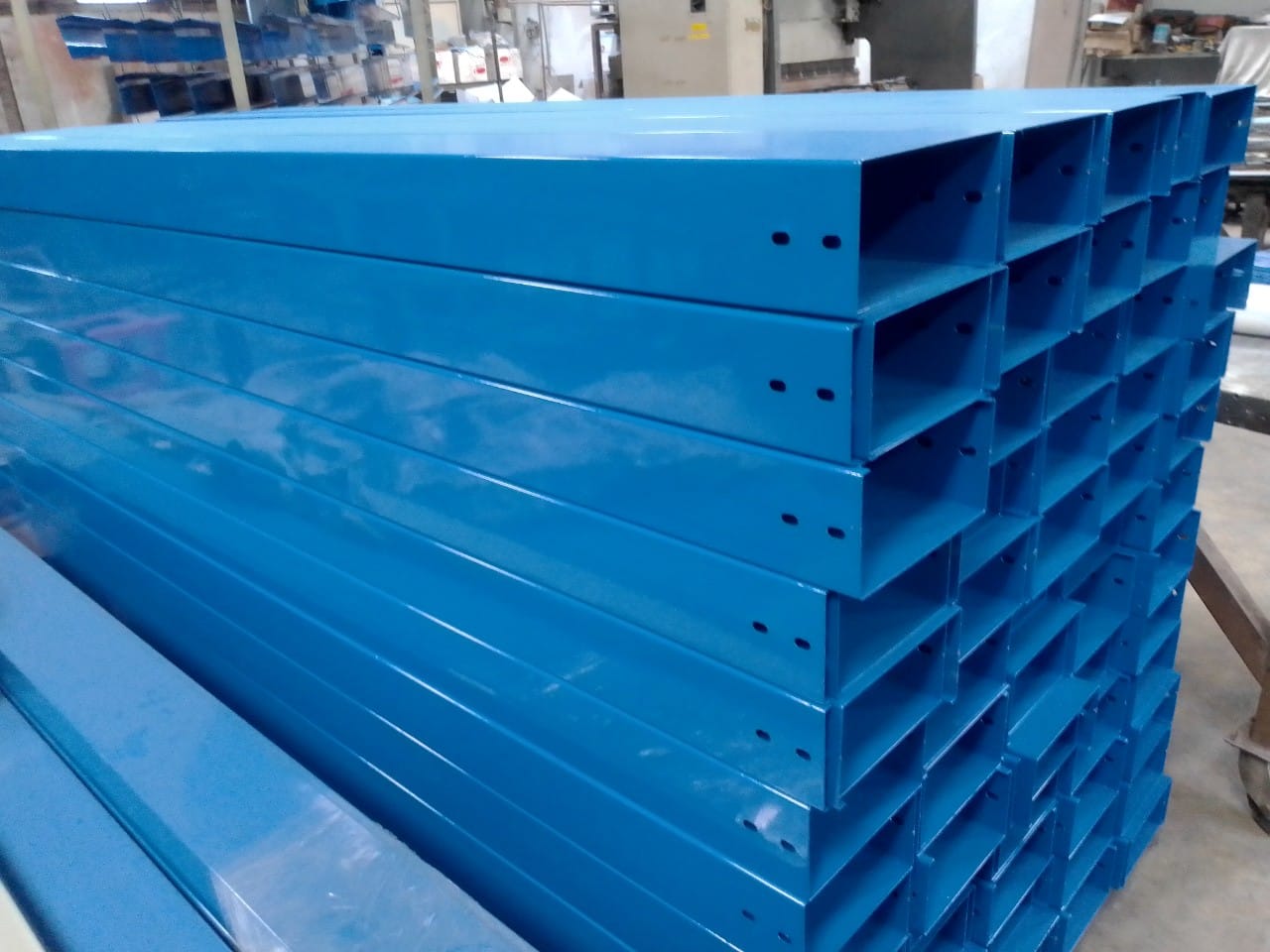

Steel — one of humanity’s most important construction materials — has played, and continues to play, an essential role in the development of civilization. From massive architectural structures to sophisticated electronic devices, steel is present everywhere, contributing to comfort and safety in everyday life. Yet the journey that creates steel products is a complex chain of processes, beginning with the collection and processing of steel scrap, passing through many stages of transformation and fabrication, until the final product emerges.
This article takes a closer look at the steel production process — from recycling steel scrap to producing high-quality steel sheet, and finally to the use of steel sheet in manufacturing cable trays, a product that plays an important role in electrical power systems.
1. Collecting and Processing Steel Scrap
Steel scrap, regarded as an essential raw material for the steel industry, is collected from various sources, including:
- Industrial scrap: Used steel products from factories and plants, such as steel offcuts, steel frames, and steel pipes.
- Construction scrap: Surplus or damaged steel materials from construction and renovation projects, such as structural steel and steel coils.
- Household scrap: Used steel household products, such as old bicycles and appliances.
Once collected, steel scrap is transported to recycling facilities for processing. The processing stages include:
- Sorting: Steel scrap is sorted by composition, size, and cleanliness to ensure input quality for the production process.
- Cleaning: Impurities, paint, grease, and plastic on the scrap surface are removed using mechanical or chemical methods.
- Shredding: Steel scrap is cut into pieces of a size suitable for the steelmaking furnace.
- Compacting: Steel scrap is compressed into blocks to save space during transport and storage.
2. Producing Steel Billets
Once processed, steel scrap is fed into a blast furnace or an electric arc furnace to be smelted into crude steel. The crude-steel smelting process includes these main stages:
- Melting the scrap: Steel scrap is fed into a blast furnace or electric furnace and melted at a high temperature (around 1,600°C).
- Deoxidation: This step removes oxygen from the molten scrap while adding materials such as coke and limestone to form crude pig iron.
- Refining: The crude pig iron is fed into a refining furnace to remove impurities such as sulfur and phosphorus, producing crude steel with a chemical composition suited to product requirements.
- Casting: The crude steel is poured into molds to cool and solidify, forming steel billets.
3. Producing Steel Sheet
The steel billets produced in the previous stage go through hot rolling to become steel sheet. The rolling process includes:
- Heating: Steel billets are heated to the appropriate temperature (around 1,200°C) to achieve the ductility needed for rolling.
- Rolling: The heated billets pass through pairs of rollers that gradually reduce their thickness, producing steel sheet of the desired size and thickness.
- Cooling: The steel sheet is gradually cooled to reduce its temperature and stabilize its structure.
- Cutting and finishing: The steel sheet is cut to the required dimensions and finished to ensure flatness and surface quality.
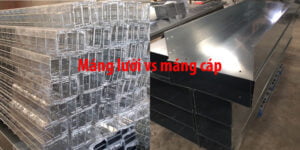
4. Manufacturing Cable Trays from Steel Sheet
Once produced and quality-tested, steel sheet is used as the primary raw material for manufacturing cable trays. The cable tray manufacturing process includes:
- Cutting and bending: Steel sheet is cut to the desired size and shape, then bent to form the components of the cable tray, including the base, side walls, and cover.
- Welding: The cable tray components are welded together using suitable welding methods, ensuring strength and water resistance.
- Surface finishing: The cable tray surface is treated to improve corrosion resistance and appearance, such as through powder coating or galvanizing.
- Quality inspection: The finished cable tray is thoroughly inspected for strength, load-bearing capacity, and water resistance, ensuring it meets technical and safety standards.
5. Applications of Cable Trays in Electrical Systems
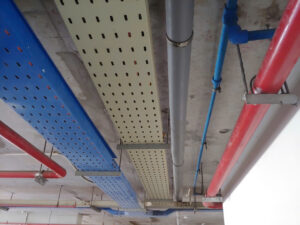
Cable trays are an important product in electrical systems, responsible for protecting and routing electrical conductors. Their applications include:
- Protecting conductors: Cable trays shield electrical conductors from external environmental effects such as sun, rain, dust, and chemicals, extending the service life and durability of the electrical system.
- Organizing conductors: Cable trays help arrange electrical conductors in a systematic, orderly way, reducing clutter and the risk of short circuits and fire.
- Ensuring safety: Cable trays are designed to isolate electrical conductors from other equipment, minimizing the risk of electrical leakage and ensuring safety for users and the environment.
- Flexible and easy to install: Cable trays have a flexible design that is easy to install and adapt to the requirements of the electrical system.
6. The Role of Steel Scrap in Sustainable Development
Recycling steel scrap plays an important role in protecting the environment and promoting sustainable development:
- Reducing resource extraction: Using steel scrap reduces the need to mine iron ore, a non-renewable resource, helping protect the ecological environment.
- Reducing greenhouse gas emissions: Recycling steel scrap consumes less energy than producing steel from iron ore, thereby reducing greenhouse gas emissions and limiting the greenhouse effect.
- Reducing environmental pollution: Recycling steel scrap reduces solid waste and lowers soil and water pollution.
- Saving energy and cost: Using steel scrap saves energy and production costs, helping improve the competitiveness of the steel industry.
Conclusion
From steel scrap to cable tray is an impressive journey that demonstrates the recyclability and versatile application of steel in modern life. This process not only delivers economic benefits but also contributes positively to environmental protection and sustainable development.
In the future, as science and technology advance and environmental awareness grows, the steel industry will place ever greater emphasis on recycling scrap and using advanced technologies to produce high-quality steel — improving resource efficiency and protecting the environment for future generations.
Appendix
1. Some technical standards related to steel sheet and cable trays:
- ASTM standard for steel sheet: ASTM A36
- IEC standard for cable trays: IEC 61537
- Vietnamese standard for cable trays: TCVN 10688
2. Some advanced technologies applied in steel and cable tray manufacturing:
- Electric arc furnace: Uses an electric arc to melt steel scrap.
- Vacuum refining furnace: Removes impurities from steel using a vacuum process.
- Continuous cold rolling: Improves productivity and the quality of steel sheet.
- Welding robots: Increase the speed and precision of cable tray welding.
- Laser cutting machines: Cut steel sheet to size and cut the required holes.
- Press brakes: Form the cable tray shape.
3. Issues of concern in the steel industry:
- Improving energy efficiency in steel production.
- Reducing greenhouse gas emissions.
- Developing green, environmentally friendly steel production technologies.
- Improving the quality of human resources in the steel industry.
4. Future development trends in the steel industry:
- Increasing the use of steel scrap as a production input.
- Developing new steel grades with superior properties.
- Applying information technology and automation to steel production.
- Improving product quality to meet the market’s growing demands.
We hope this article has given you an overview of the steel production process, from steel scrap to cable tray, as well as the importance of the steel industry to economic and social development.