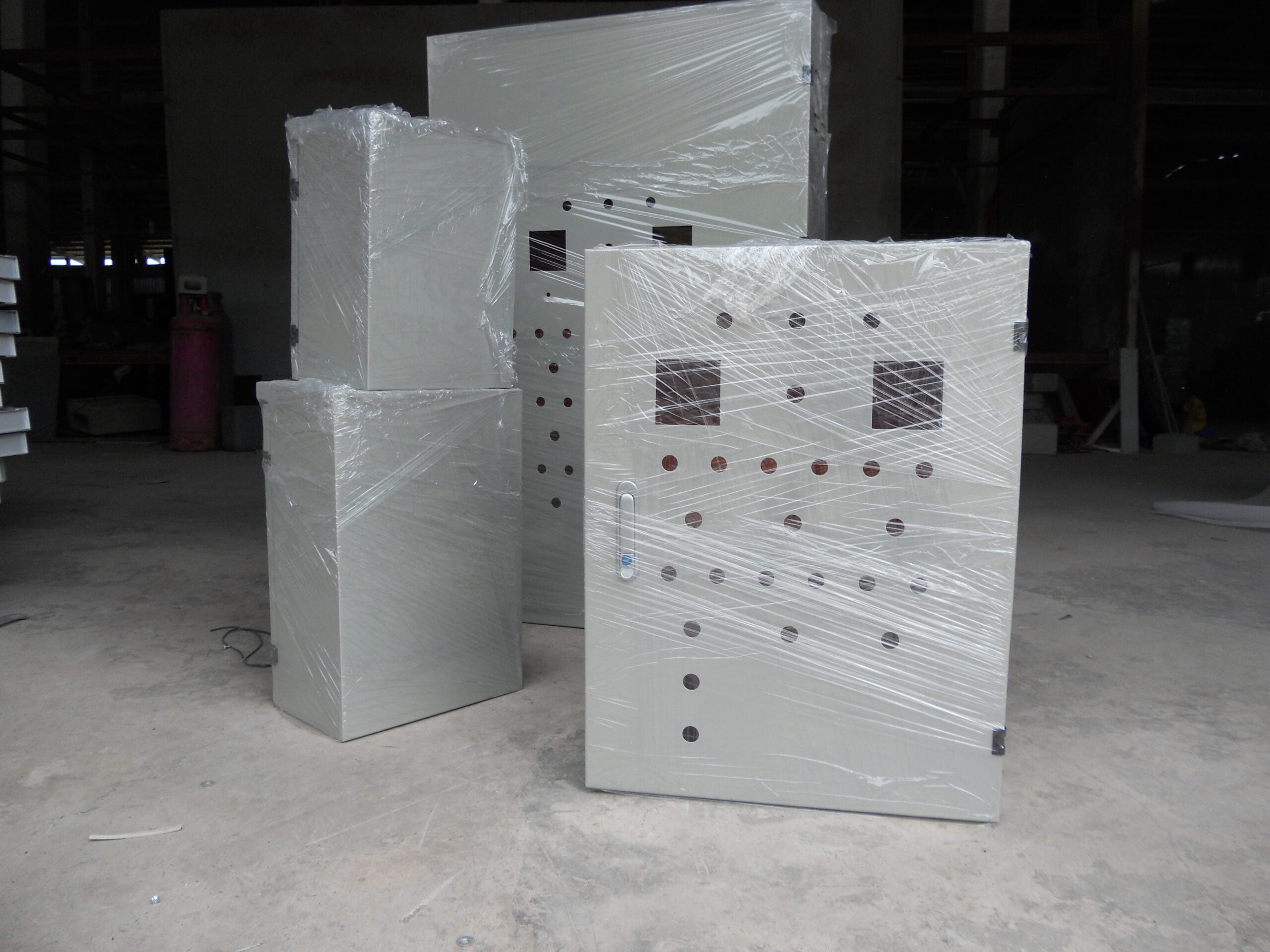

An electrical enclosure is an indispensable part of any electrical and control system, playing an important role in protecting electrical equipment and keeping users safe. On the market today, enclosures are made from a range of materials such as powder-coated steel, stainless steel, aluminum alloy, and plastic.
In this article we focus on the two most common enclosure types: powder-coated steel enclosures and stainless-steel enclosures. Each has its own advantages and disadvantages suited to specific applications. We will analyze the key considerations when choosing between these two enclosure types.
1. Powder-Coated Steel Enclosures
1.1. Characteristics
Powder-coated steel enclosures are manufactured from high-grade steel and coated with a layer of powder paint to protect the surface. Powder coating not only provides a high-quality appearance but also creates a protective layer against corrosion and oxidation.
1.2. Advantages
- Reasonable price: Compared with stainless steel, powder-coated steel enclosures cost less, making them popular for many applications.
- High durability: Steel offers good mechanical strength, able to withstand impact and strong external forces.
- Aesthetics: Enclosures can be painted in a wide range of colors, easily matching a project’s overall design.
1.3. Disadvantages
- Environmental durability: Even with a protective coating, steel can still oxidize and corrode when exposed to humid or chemical environments.
- Periodic maintenance: Maintaining appearance and durability requires periodic maintenance, such as repainting or surface inspection.
2. Stainless-Steel Enclosures
2.1. Characteristics
Stainless-steel enclosures are manufactured from corrosion-resistant stainless steel, offering far better corrosion resistance than ordinary steel. Stainless steel is often used in highly corrosive environments, such as food-processing plants, pharmaceutical facilities, or outdoor applications.
2.2. Advantages
- Excellent corrosion resistance: Stainless steel does not rust, so it resists corrosive factors such as moisture, chemicals, salt, and other environmental effects.
- Simple maintenance: Stainless steel is easy to clean and does not need repainting the way powder-coated steel does.
- High aesthetics: Stainless-steel enclosures give a modern, upscale appearance suited to many high-standard spaces.
2.3. Disadvantages
- Higher cost: The corrosion resistance and durability of stainless steel make production costs higher than powder-coated steel.
- Harder to fabricate: Stainless steel’s high hardness makes machining and fabricating parts more difficult, requiring specialized equipment and skills.
3. Usage Needs and Applications
The choice between a powder-coated steel enclosure and a stainless-steel enclosure depends on the specific environment and application:
- Powder-coated steel enclosures are commonly used indoors, where humidity and chemical exposure are limited — for example, in offices or manufacturing plants without chemical exposure.
- Stainless-steel enclosures are the ideal choice for harsher environments, such as food-processing plants, chemical-processing facilities, or outdoor installations exposed to rain, sun, and high humidity.
4. Points to Consider When Choosing
- Operating environment: Clearly identify the environment the enclosure will operate in. If it is humid or involves chemicals, stainless steel is the better choice. Conversely, in a dry environment, powder-coated steel may be more economical.
- Investment cost: Consider the total cost over the product’s lifetime. Powder-coated steel has a lower initial price, but maintenance and replacement costs may be higher in the long run. Stainless steel has a higher initial price but requires less maintenance and lasts longer.
- Aesthetics and design: If appearance is an important design factor, stainless steel offers a more modern look that is easy to match with various interior styles.
- Regulations and standards: In some industries, material choice may be governed by safety standards and regulations. Research these standards carefully before making a decision.
5. Conclusion
Choosing between a powder-coated steel enclosure and a stainless-steel enclosure should not be based on price alone — it also requires weighing factors such as the operating environment, maintenance requirements, and appearance. Carefully evaluate the technical specifications, material properties, and specific requirements of your project to make the best decision. Getting this choice right will ensure the electrical system operates effectively, extend equipment service life, and reduce future maintenance costs.