This article introduces stainless steel and some interesting facts many people don’t know about this material. Stainless steel is a rust-resistant metal used across many fields, and it is especially useful in industry and construction. Let’s explore stainless steel and its diverse applications.
What Is Stainless Steel?
“Inox” comes from the French word “inoxydable”, meaning “does not oxidize” (“acier inoxydable” means “rust-free steel”, known in English as stainless steel). Stainless steel is an iron alloy containing elements such as chromium, nickel, and molybdenum. Thanks to these elements, it resists oxidation and rust, making it an ideal material for applications requiring durability and resistance to the external environment.
Depending on the amount of each alloying element, stainless steel comes in different grades, each with its own properties.
Stainless Steel Grades
Below are some common stainless-steel grades used in industry and construction:
- 304 stainless steel (also called A2): The most common grade, widely used in industry and construction. 304 offers good corrosion resistance, is easy to machine, and has high mechanical strength.
- 316 stainless steel (also called A4): Contains more nickel and molybdenum than 304, increasing corrosion and rust resistance in salt-water and chemical environments. 316 is commonly used in medical, chemical, and oil-and-gas applications.
- 430 stainless steel: A ferritic grade typically used in applications that don’t require high corrosion resistance, such as panels, casings, or interior fittings.
- 201 stainless steel: Similar properties to 304, but with higher aluminum and manganese content. Typically used in applications where exposure to corrosive environments should be limited.
- 410 stainless steel: A martensitic grade with increased carbon content. This grade offers high hardness and relatively good mechanical strength. Commonly used in applications requiring high hardness and strength, such as knives, scissors, or machine components.
These are just some of the common stainless-steel grades — many others exist for specific applications.
History of Stainless Steel
Stainless steel was first developed and used in the late 19th century. Pierre Berthier, a French scientist (which is why the term originates from French), discovered the formula for producing stainless steel in 1821. However, it wasn’t until the early 20th century that stainless steel truly became popular and widely used in industry and construction.
Applications of Stainless Steel
Stainless steel is used across many different fields thanks to its rust resistance and durability. Below are some common applications:
Food industry: Used in food production and processing, ensuring hygiene and resistance to oxidation.
Chemical industry: Thanks to its corrosion resistance and ability to withstand high pressure, this material is used to store and transport hazardous chemicals.
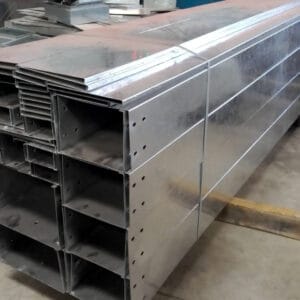
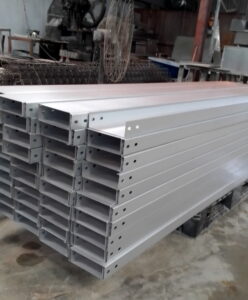
Construction and architecture: Stainless steel is used in bridges, factories, high-rise buildings, and other industrial structures, thanks to its rust resistance and polished surface. In the industrial electrical support sector, stainless-steel cable trays, ladders, and enclosures are premium products — costlier, but delivering outstanding quality with a service life of several decades.
Aerospace industry: Because stainless steel withstands heat well, it is used in manufacturing aircraft, spacecraft, and related components.
Healthcare: Stainless steel is used to manufacture medical instruments such as scalpels, implants, and dental tools, thanks to its corrosion resistance and antibacterial properties.
Benefits of Stainless Steel
Stainless steel offers many benefits across various applications. Below are its key advantages:
Corrosion resistance: Stainless steel’s greatest strength is its resistance to rust. Thanks to chromium, nickel, and molybdenum, it is unaffected by the external environment, making it popular for applications requiring durability under weather or humid conditions.
High durability: Stainless steel has high mechanical strength, allowing it to withstand mechanical effects such as pressure and impact, extending its service life. This makes it an ideal material for industrial and construction applications requiring high durability and reliability.
Easy to care for and maintain: Products made from this material are easy to care for and maintain. Because it resists rust, it requires little effort to keep clean — stainless-steel products usually only need to be wiped down with water and ordinary cleaning agents to stay clean and fresh-looking.
Antibacterial properties: Stainless steel has natural antibacterial properties, making it well suited to medical applications such as medical instruments and equipment. Its surface does not readily support bacterial growth or contamination, ensuring safety and hygiene for users.
Aesthetics: Beyond its physical and functional benefits, stainless steel also offers high aesthetic value. Its polished, shiny metal surface creates a modern, elegant look, which is why it’s often used in interior design and decoration to add beauty and sophistication to a space.
These are the main benefits of stainless steel across its various applications. Corrosion resistance, durability, ease of maintenance, antibacterial properties, and aesthetics are all important factors when choosing a material for a project.